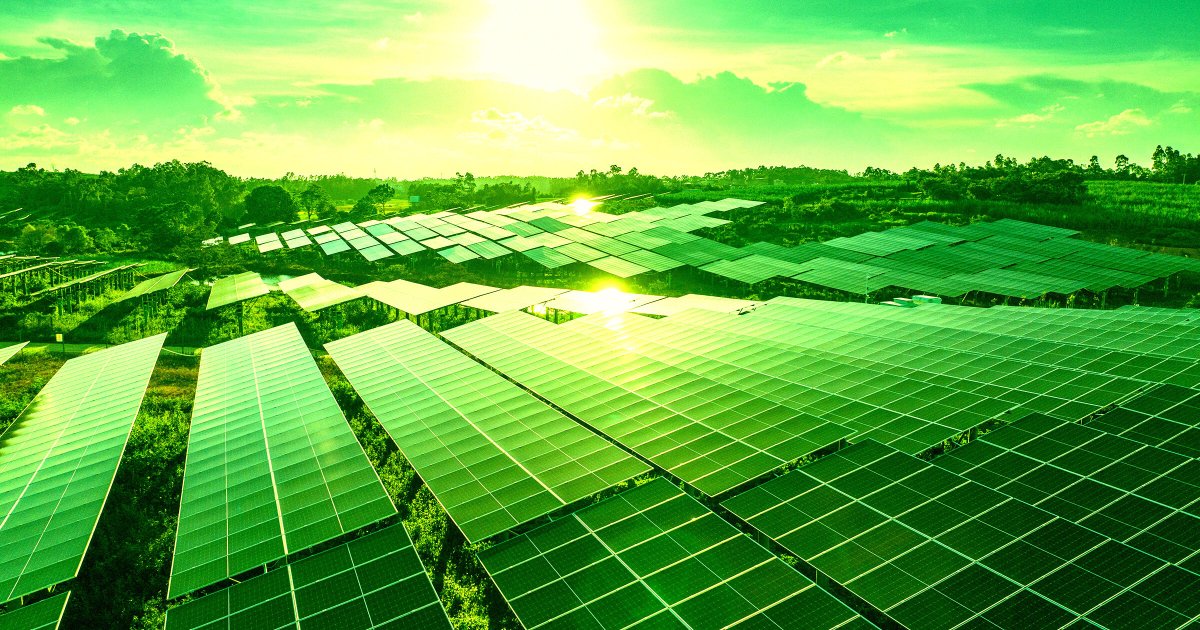
Yup, it’s all about the economics. Solar + Lithium batteries is cheaper is cheaper than anything else. When Sodium batteries start getting cranked out it’ll be even cheaper.
You mean we can make FREE ENERGY in our BACKYARD for almost NO Money? This is TERRIBLE!
-LITERALLY Conservatives!
Don’t y’all know everything is made from oil and this is why we should keep burning the stuff to never see it again?
-Also LITERALLY Conservatives
Won’t somebody please think of the investors!?
While I consider myself pro nuclear, there is something that gets forgotten everytime this conversation comes up.
Nuclear produces waste, which is mentioned often but it is usually responded by pointing out that it could be recycled and the worse to be buried.
Here is what people miss:
Are all our nuclear waste handled correctly today? If not then why should we imply that they will be in the future.
The problem with nuclear isn’t that the waste is impossible to handle, it’s that humans are too short sighted to follow through with it.
And imo that’s a very valid argument on why we should use solar as much as we can.
While I consider myself pro nuclear, there is something that gets forgotten everytime this conversation comes up.
The problem with nuclear isn’t that the waste is impossible to handle, it’s that humans are too short sighted to follow through with it.
Thats not even the biggest problem with nuclear power as the waste angle, at scale, will hit us decades in the future. The more urgent problem hitting us now on even on existing deployed nuclear plants is cooling water.
The byproduct of nuclear power generation is lots AND LOTS of waste heat. You have to get rid of this every second to continue to produce electricity. This is why nuclear power plants are typically built next to a large body of water. However, with reduced water supplies in reseviors theres less water to use for cooling nuclear plants. A double whammy is with climate change increasing temperatures, the water that remains is already hotter than it was, meaning it can carry away even less heat.
If a plant can’t get rid of its heat it needs to curtail (reduce) electricity production. This isn’t just theoretical. Its happening now in 2026 to existing power plants:
-
Hungary - Aug 2026 Hungary plans to shut down only nuclear power plant amid drought
-
Romania - Aug 2026 Nuclear power plants are being shut down as Europe’s drought becomes an energy crisis
-
France & Switzerland - Aug 2026 Droughts cause nuclear power plants in Europe to reduce output
At the time when Europe was experiencing its worst heatwave is recorded history, many European reactors had to be turned down or off. 2026 isn’t the first time this has happened either, you can go back in the last 5 years or so and see many reports of nuclear plant curtailment because of lack of cooling capacity (cool water).
When we know global temperature are rising, it looks like this will just get worse. How can we say nuclear is the future when the conditions for it working well are already declining?
-
Being pro-nuclear was a very valid position up until a few years ago. Now solar has gotten so cheap that there is practically no reason to do it except to protect yourself against US imperialism.
You can still like it if you are looking far enough in the future to realize it’s the only viable energy source for space travel past like… Mars. Further than that and solar panels just won’t generate enough.
You do realize that you can support multiple things? You don’t have to be antinuclear to be pro-solar.
This is true. I am mostly pro-solar and mostly anti-nuclear, but if we decided to build a huge multi-national plant to combat/reverse global warming and it needed obscene amounts of energy to operate, I think that might be a perfect task for nuclear. The same doesn’t hold true for AI data centers though. I hope those guys have to generate their power by daisy chaining potato batteries.
You need to choose a thing to build there is not unlimited budget.
Solar still has some huge problems when it comes to seasonality and day/night cycle. You either need massive battery build out or some other form of energy to handle base loads and/or offset when solar isn’t producing enough.
Not saying solar isn’t part of the future, but we literally can’t just rely on solar.
Battery tech is getting super good though, and the materials are recyclable. If solar becomes cheap enough we could even store it in creative (but less efficient) batteries like lake batteries or weight batteries and the like.
I had heard of lake batteries over the years, but never a weight battery. Thank you for teaching me something new today!
You know what else I haven’t heard of in a while? Thermal solar, where they use a parabolic mirror array to concentrate the sun onto a small tube full of water pushing a steam turbine. Even the plain steam could be used for heating and more. Steam can absolutely be concentrated under pressure (more of a capacitor than a battery since the temp won’t hold, but it does provide stability). The steampunk future from comic books is at our finger tips only we will generate the steam using the sun rather than big factories of iron and steel.
Solar panels have become more than ten times cheaper than they were a decade ago. They are easily able to gather half the energy of what they did a decade ago in the summer now in the winter.
So even in the winter solar is twice as price efficient.
Yes there is downtime but solar is a fast and cheap way to replace most electricity cost. Then the rest can be fixed with nuclear in 20 years. We need clean cheap energy now and we can mostly get it.
I’m not talking about price, I’m talking about generation.
I have solar panels, they are great. However, I get too much energy in the summer, not nearly enough in the winter, and no power at night. Since I’m on a grid that doesn’t matter too much for me, but highlights some of the issues.
Even if I installed a battery, I’d end up with extra power in the summer and not enough in the winter. Which just highlights the discrepancy in production. Batteries obviously help solve this, but some mixture of wind/nuclear/other is needed.
This isn’t a problem at City scales and beyond. You just can’t buy a bunch of nazi batteries so there isn’t a corp greasing politicians to build it.
Nuclear, both fission and fusion (which will never happen anyway) are relics of an era of cheap fossil fuels and relative world order.
Solar electricity is viable at scale but also indicates a change in our species’ living arrangements on this planet.
We have started to build the first commercial fusion plants now. You may want to update your rhetoric.
I look forward to seeing them produce energy in a short 20 years from now.
You should read up on the topic, I know I was surprised, the breakthroughs have recently happened. Now it is just permitting and building. Obviously there will still be issues, but there is little question to the reality now.
I’ve read of smaller reactors that should speed up prototyping, but nothing about actual net positive energy production. That’s still far away.
This happened a long time ago. Prototyping is over. I was very skeptical as well up until they figured out a practical reactor design and are in the process of building and permitting several commercial plants around the world.
No, there won’t. You sound like you’ve never heard of a scam. Here’s one:
https://en.wikipedia.org/wiki/Solaren
Just, no.
Living in denial as they are building commercial plants. Looks like Big Oil propaganda got you.
You may want to update your physics, engineering, and reality.
You can remain ignorant, it is up to you. Cheers!
Haha! Hilarious. Get back to me in a year. Cheers yourself!
That’s an interesting way to look at it. If it’s not just about the power and the cost, there are actually a lot of other factors that we have glossed over.
Solar is cooperative and local while nuclear necessitates centralization. In a nuclear future, large nuclear generating corporations are the sellers and we are the buyers. In a solar future, we pool and exchange our power depending on current production ability and current electric need… comrade.
Yes, but the bonanza of fossil fuels that rocket-propelled humanity from 1859 onwards with chemicals and pesticides and fertilizer is not sustainable with only renewable energy and resources.
For example:
https://en.wikipedia.org/wiki/Green_Revolution
You think things are kind of uncomfortable now wrt inflation and fuel prices? Oh hold on, it’s not going to get better!
Nuclear reactors could still be useful in things like the mass production of hydrogen through steam electrolysis or even using fancy stuff like thermochemical reactions.
I know China is planning on building the world’s first nuclear reactor integrated into an industrial area for the production of very hot steam.
To the disposal argument i like to ask; are we handling our waste from burning fossil fuels well?
Is run away climate change “doing it well”?
Would you rather your waste be buried in the ground or pumped into the atmosphere?
Containing the waste and burying it in the ground is the default for nuclear, meanwhile doing the same for CO2 is very challenging and it may never be viable.
But we are comparing solar to nuclear.
Being better than fossil fuels is a pretty low bar.
And yes better nuclear than oil but the whole thing about nuclear is that it has a very delayed start time, so the argument of needing it ASAP supports solar if anything.
IMHO another big issue with nuclear is concentration of power. nuclear is quite stable, but not always and when it fails you suddenly loose a huge bunch of production that becomes hard to replace. (and Im not even getting into safety here)
France had to deal with a lot of issues just this year, with around 20% of their nuclear plants unoperative, which increased prices dramatically.
Solar is mostly distributed by design (and need) and failures are smaller
A hailstorm wiped out 350mW of solar in Texas in 2024. But, they learned that the angle of panels was critical to avoid damage and now they have a hail storm mode that increases the angle to protect the panels.
Not sure if panels can survive hurricanes, certainly not tornados.
350mW
Maybe they should keep some AA batteries around just in case another hailstorm hits.
fire it into space futurama style
Would you trust a SpaceX rocket with radioactive waste?
I would. If my goal was crashing that waste into a random subdivision or exploding on the launchpad dirty bomb style.
Let’s just not do it Space 1999 style.
We also have limited potential stores of uranium. When Chinese reactors all get on line, maybe 40 years left.
Agreed. Are we seriously forecasting 5000 years of stable, deep, under-mountain storage. For all those years, waste storage is a prime target for contaminating locales.
The other quality argument I’ve heard from Lemmy, is that the security requirements for nuclear plants are essential and costly, due to plants being a similar target for creating contamination.
Essentially, nuclear power is a fascist tech, due to the centralised, militaristic, security apparatus required for the life of the plant and waste.
nuclear power is a fascist tech
Calm down, Francis.
Guess which single country is making all the PV panels?
I’ve seen plenty of conservatives say they’d rather have a loud data center than quiet solar farm near their home.
I don’t understand.
We are for the jobs the comet will bring.
Well the solar farm uses tons of water and power, causing shortages and high prices, creates a giant eyesore of a building that will be worse than a dead mall when the bubble pops, and generates a crapload of noise and pollution. …… oh wait, that’s not solar
Possibly because the main data center companies are US held, while solar progress is much more international. Conservatives don’t see the world as “emissions vs technical progress”, but rather as “us vs foreign aliens”.
I doubt most conservatives have considered where the solar panels are being manufactured. They just hate them because their favorite talking head told them to.
it’s crazy how close to post scarcity utopia we can get but you get these chuckle fuck red hats that are just hell bent on letting billionaires revert us back to feudalism
But both are American owned and operated but manufactured overseas…
I have read the inverter and related cooling equipment of the solar system can be noisy if poorly implemented or maintained, though I doubt it would rival the downsides of a data center.
Even if both made the same amount of noise and/or occupied the same amount of space, a Solar Farm is better because it produces energy. A Data Center consumes energy (not to mention the energy is also being spent unethically.)
Easiest to say when you’re not living near either
I know, those solar panels are just soooo loud
Turns out the sun has a few competitive advantages over nuclear: free fuel, no radioactive waste, and it doesn’t need a decade of permits before it starts shining. The real bottleneck now is grids and storage. Imagine losing the energy race to a giant fusion reactor 93 million miles away. 😎
It has its issues, but yeah currently it is the cheapest source of power, it got so cheep that individuals can build their personal power plant for their home.
And we still have idiots fighting it. Even if you don’t care about environment (you are “drill baby drill” kind of person) it still makes sense economically.
The weirdest thing about it are fascists who support oil and gas imports from Russia and complain about woke left-green sleep paralysis demons but at the same time they have solar cells on their roofs and will tell you how much money they‘re saving them and how liberating it is. Call them renewables however and you can expect a rant about woke conspiracies and chemtrails or something.
The real bottleneck now is grids and storage.
And turns out nuclear has a few competitive advantages over solar. They are both great and serve different purposes.
Nuclear’s big selling point is that the sun goes down. Batteries have apparently missed that memo: they keep getting cheaper, better, and more efficient. Storage won’t solve every grid problem overnight, but pretending today’s limitations are permanent is a strange way to plan tomorrow’s energy system.
another big selling point of nuclear is it’s easy to drop in at old coal plants that already have grid connections ready to go.
pretending today’s limitations are permanent is a strange way to plan tomorrow’s energy system.
how long are you willing to wait for perfect energy storage?
obviously battery tech will improve, but the point is we cannot afford to assume that problem will be solved 100%, meanwhile experiencing more and more irreversible damage to our environment. We need to put our eggs into all clean energy baskets to get off CO2 as soon as possible. Not whenever battery tech happens to be ready to handle everything.
Nobody’s asking us to bet on miracle batteries: Wind and solar paired with storage are already cheaper than building new nuclear. Reusing a coal plant’s grid connection doesn’t magically make a reactor cheap or quick to build. If speed and CO2 matter, follow the numbers, not the nostalgia.
“Cheaper” is not the most important metric.
“it’s easy to drop at a place that has grid connections”
Funny, because solar or literally any other plant will also benefit from having existing connections, and all of them are easier and cheaper to build than nuclear.
Nuclear is dead but for niche applications.
In your world, is “tomorrow’s energy system” exclusively solar/hydro?
No, in my world tomorrow’s grid uses whatever delivers reliable electricity at the lowest total cost: solar, wind, hydro, geothermal, storage, and yes, nuclear if it can compete. This isn’t a religion with approved energy sources. It’s an engineering problem with a price tag, and nobody gets bonus points for glowing in the dark.
Exactly, this is an engineering problem. You’re talking it like it’s an accounting one. Reliability, emergency use, redundancy, generating potential and universal scalability are the most important factors. Cost is a completely separate issue governed by separate factors, many of which are 100% artificial.
You’re stringing worlds together at this point.
Cost is the single largest factor in the deployment of new power plants, and solar is just impossible to match right now.
You could spend literally decades and billions building a nuclear plant, or start deploying solar right this minute and immediately reap the rewards of that investment.
It’s a no-brainer.
But it doesn’t need to be one or the other. The more diverse the grid the better. I’ll also say again, cost on both sides is mostly artificial anyway.
Dude, the cost is the final decision point after all those concerns are handled…
nobody gets bonus points for glowing in the dark.
where the fuck did anybody say that?
“Glowing in the dark” refers to nuclear power sources. Hope this helps.
yes i know that, genius. the point is that is not an argument people are using for nuclear. it’s a blatant straw man from someone clearly not engaging in a goood faith discussion.
A lot of people support nuclear for largely cultural reasons.
What cultural reasons would anybody support it for?
Nuclear is simply incompatible with renewables, if the price tag is of any concern to you. Nuclear reactors take long and cost a lot to build, still aren’t cheap to operate if you include the infrastructure cost of getting, handling and storing the fuel, can’t respond to changing demand quickly and are centralized.
Nuclear power plants need subsidies over their whole life, mainly to handle the risk inherent with nuclear fuel and the finincial risk of having to handle spent fuel for centuries to come. Nuclear power plants need to run at full power, which costs money every time renewables are pushing the energy price into the negatives. Nuclear power plants need a centralized power grid.
Renewables work in exactly the opposite way. They are cheap to build and maintain, they are variable and decentralized. So to use renewables effectively, you need to build a decentralized grid and ideally on-premise energy storage.
Renewable energy simply wins in terms of cost, risk-management and scalability. So the energy grid of the future will be purpose-built to accomodate renewable energy. Trying to force nuclear energy generation into that mix only makes sense, if you have a clear, non-monetary reason to do so, like enriching uranium for bombs. For strictly commercial use, nuclear power is dead.
There will be diversity in the future grid, but that diversity will be in the forms of energy storage used. I think the grid of the future is almost entirely solar but with different energy storage systems optimized for different time scales. For storage on the order of seconds, you use fly wheels to replace the spinning mass once provided by gas turbines. For daily swings, vast warehouses full of old electric car batteries work well. For longer term storage, you can use chemical energy storage or flow batteries. Think making vast tanks of ammonia or methane. You use excess electricity in the summer, store it as chemical energy in vast tank farms, and then burn it or run it through a fuel cell in the winter.
Although, for seasonal variation, the most practical solution might be just to spam solar panels. It just depends on the price ratio of solar panel cost to storage cost. You could have a grid that just had so much solar deployed that it is able to cover energy demand even on cloudy winter days. You just flat out build that many panels. Maybe then in the summertime you’re capable of producing 10x your normal power needs.
Seems wasteful, but this would just encourage a lot of very energy-intensive industries to become more seasonal. We have a farming season, why not an steal smelting season? Why not an AI model training season? Maybe for datacenters, the big runs are done during the summer when power is dirt cheap. Then the companies spend the winter planning next year’s runs, etc. Or the extra power could be used to make synthetic fuels from CO2 pulled from the air. Maybe we never figure out how to make batteries good enough to power a trans-oceanic jumbo jet. But maybe we don’t have to. You offer dirt cheap energy on a seasonal basis, and people will find uses for it eventually.
Take Germany that has solar and wind combined production capacity between 4 and 5 time its needs in electricity. Yet, It can not cover its needs. If you cannot produce electricity to cover your needs, you are far from being able to store an excess of your production. The last solar farm Germany was building south of Berlin had an estimated efficiency of 10%… The capacity of the power grid isn’t a light issue, and it is far from being resolved.
So before thinking about having a full working renewable power grid, you have to rely on a working mass production system. Germany choose coal and gas, which makes their emission of CO2 for producing electricity high during most of the year
Now take France. It has a solid capacity of electricity based on nuclear. It is among the least CO2 emitter in the world to produce electricity. Now, if their energetic politics was a future oriented one, France would ramp up its renewable capacity while maintaining its nuclear capacity (so building new reactors to replace old ones) to not loose on stability.
Nuclear isn’t the energy of the past, nor a nostalgic one. It is probably the most efficient mass production system for electricity we have to transitionning to renewable while not messing up the CO2 emissions.
Not all countries have ideal solar exposition, nor constant wind… Not to mention that hydroelectricity requires land specifics advantages and geothermal energy isn’t an everywhere solution, as drilling can cause problems.
There is no miracle solution, only partially satisfying ones.
Most of the country that have a 100% or near 100% renewable power grid rely on hydroelectricity. Which is not achievable by all.It’s not a race between technologies, it is a race to find the most efficient way to produce low CO2 electricity… while maintaining the confort of people and factory productivity, because, you know… Shareholders are the most important thing in the world… Apparently…
The problem in germany is that we been ruled by Conservatives who failed to expand the grid so the cheap energy (in the north) gets where it’s needed (in the south).
Expanding the grid and the storage is still cheaper than investing in nuclear.
And despite all the fossil driven propaganda the german power grid still operates very reliable. (Execpt when terrorists cut a single line, because again we’ve been ruled by Conservatives and they don’t seem to know what redundancy means)
deleted by creator
Do you mean that renewable are mostly concentrated in the north of Germany and fossil fueled power plant are mostly used in the south ?
Searching for Germany, I see many articles on grid storage - basically at its infancy but exploding in popularity. I also see huge expectations on pumped hydro storage
Seems like you’re arguing that we should stop building out these proven, low cost solutions in favor of dumping tons more money into a problematic technology that will take decades and billions of dollarseach
The hydro storage has the same problem than the battery storage. You have to build a reliable eletricity production that cover your needs before being able to store your excess.
How much power can you store with hydro storage ? Do you have enough land/mountain to create the artifical lakes at different elevation ? Can you store enough energy to compensate the reduced production of solar power during winter ? For now, storage is either for short periode ,(days, maybe weeks, with batteries) or limited capacity (hydro pumping). If you are interested on storage technology you should look on the CO2 storage that Italy built lately.
It is complicated to rely on yet to develop technologies to power an entire country. Some can, they should, other can’t, and have to rely on non renewable energy.
I’ve written than Nuclear is probably the best way to produced decarbonated electricity while waiting for good solutions for the renewable energy. I’ve never said that we should stop developping renewable. While the world spend money on an energy and water consuming technoloy like IA, it would be way more intelligent to focuse all that money on developping renewable… Yet to produce solar panel, wind turbin, concrete, we still need fossile fuel or nuclear. So giving up on it would only make things more complicated.
Time is the missing value here.
- that disregards the massive time commitment needed to build out nuclear. When each plant takes over a decade to build and there is no ready supply chain, they can’t be mass produced, scaling out would take many many years
- while also ignoring that even the fast solar buildout takes time. Even with ready supply chain, mass production, mature technology, we need to expect scaling out to take 20+ years. We may not have all the answers for storage yet but it’s all known technology and we have 20+ years to figure it out. It’s ok to lag behind solar a bit
*long term storage, cause batteries are good for ~24 hrs
That’s why they’re sending mirror satellites to blot out the sun unless you subscribe to Sun+. Can’t have free electricity for the masses
Edit: this would have sounded like the most batshit crazy conspiracy theory a decade ago; look where we are now
headline is clickbait. here’s the only thing it relies on:
According to new reporting by the BBC, photovoltaics will account for 10 percent of the world’s power generation by the end of 2026, a threshold which will see solar energy officially surpass nuclear fission.
Compared to nuclear energy generation — which has stayed largely flat over the past 26 years globally — the publication notes the volume of solar energy being generated has exploded, increasing some 2,700 times over across the same period.
so it’s saying that nuclear usage share is so low that solar will very soon generate more power than it, not that solar panels are now more efficient than nuclear
so it’s saying that nuclear usage share is so low that solar will very soon generate more power than it, not that solar panels are now more efficient than nuclear
We’ve known the ROI on Solar/Wind has been better than Nuclear for decades.
Nuclear usage is flat because it isn’t profitable to build or operate. The efficiency of Renewables is economic efficiency. Cheap scaling, low overhead, high profit margin
The main advantage nuclear has is size. It can produce more power per hectare of land than either solar or wind can, and this will be even more the case if the small scale reactors that Canada has been researching ever become a thing - basically a power plant in a shipping container, meant to service remote communities.
People have been trying to do small scale fission for decades. They always slam headfirst into the square cubed law and the fact that fission plants were built giant for a damn good reason. Fission is so cost inefficient that the only remote hope you can have of making it profitable is if you build giant reactors and hope for big economies of scale. The hope of building small reactors on assembly lines has proven to be a pipe dream. Many have tried it, and it has failed again and again.
Which is definitely helpful for utility that’s constrained by space. For instance, with the nuclear powered freight shipping that Jiangnan Shipyard is looking to pioneer.
But for urban grid power or industrial production at the continental scale, space isn’t an issue. One reason why states like Texas and California are running away with renewable power even in the face of hostile political headwinds. Real estate is far cheaper than the energy is produces.
For the places that have enough land and environmental conditions suitable for wind/solar, that is true. In remote communities, just getting the materials for a wind farm there is incredibly difficult if there’s no warm water port for a ship to deliver the blades for instance. A nuclear reactor in a shipping container can be driven by transport on the logging roads or even air-lifted in. It’s not a universal solution, it’s something specific to fit a community’s unique needs.
For the places that have enough land and environmental conditions suitable for wind/solar, that is true.
Again, who doesn’t have this access?
In remote communities, just getting the materials for a wind farm there is incredibly difficult
Remote communities don’t have the kind of energy demand that nuclear power fulfills. Nevermind how it’s always going to be more expensive to build a nuclear generator than a big fan connected to a dynamo.
It’s not a universal solution
It doesn’t need to be, when the bulk of what we’re trying to replace is coal and natural gas.
I agree with this; I think the “universal” argument and subsequent infighting is propped up by the oil lobby to slow us down. I just think it’s important to highlight how efficient nuclear is. We should be using both good tools to solve this and part of that is knowing how good both are so they’re not unnecessarily ignored.
That argument holds for existing proven tech like large nuclear and solar, but convincing governments to invest in unproven and unlikly tech is a great way to prevent actual transition to occur at all. They sop up cash and give governments reasons to build nothing now, or eventually build expensive tiny demonstration systems that do not effect the overall fossil fuel market. That list would include things like small modular reactors, hydrogen power, fusion, etc.
Again, who doesn’t have this access?
There are communities in northern Ontario that are only accessibly by airplane ~6 months of the year, and those 6 months also have very low amounts of sunlight. They’re not quite north enough to be completely dark all day, but they only get a few hours of useable light per day in the winter.
This means that a) solar is less effective in the winter, and b) if there is damage to a wind turbine blade in the winter, they may not be able to get a replacement until spring.
Remote communities don’t have the kind of energy demand that nuclear power fulfills
Each reactor cell produces about 1MW, which is about enough to power a small town of about 1,000 people. They can also be air-lifted meaning if it needs to be replaced during the winter, that is still possible.
SMRs will be neat if they actually work, but there is no demostration that they can be remotely economically feasible. Even considering carbon emissions, it would be cheaper and more effective to improve the carbon footprint of the main power grid by a tiny fraction of a percent and then just give those small northern communities modern fossil fuel plants, maybe supplemented with renewables over time.
For large northern communities, grid connections are going to be the eventual solution either way.
if there is damage to a wind turbine blade in the winter, they may not be able to get a replacement until spring.
And if there’s damage to a nuclear facility?
Only because solar/wind’s been subsidized (by nearly everybody but the US and Russia) to heck. This is like saying trains aren’t profitable because of how much the US subsidizes roads. Even then, nuclear ROI is still better in the long term, it just comes slower.
Only because solar/wind’s been subsidized
Nothing has been more subsidized than nuclear energy. It’s entire existence is predicated on public R&D. Virtually all of its generators are public projects. It’s a notorious money loser to operate. We still don’t have a good solution for nuclear waste, so that gets stashed on public lands and in Superfund sites, too.
That’s not the reason it lags the alternatives, though. If public spending got us cheap energy with zero trade offs, everyone would be France by now.
Solar/Wind, by contrast, get dogshit subsidies both relative to nuclear and fossil fuels. It outperforms in defiance of subsidies, often growing market share in states that are actively hostile to its expansion.
Even in the face of enormous cuts to public spending and bailouts to coal, under Trump 1 & 2, renewables increased their market share.
That’s because renewables aren’t just efficient, they’re profitable. Enormously profitable. The private sector loves high margins on their capex spend, and renewables consistently deliver.
Nothing has been more subsidized than nuclear energy. It’s entire existence is predicated on public R&D.
You seem to be implying that solar cells weren’t. I don’t believe that is true. Photovoltaics were brought about by US the government for satellites. (PV was initially discovered privately, but so was nuclear.) Solar was considered a notorious money loser to the point where it was only deployed for spaceflight. It was only after 60 years of public R&D that private commercial solar became variable in the 2010s.
We still don’t have a good solution for nuclear waste, so that gets stashed on public lands
This I’ll concede. In fact, in the US, it’s worse than “public lands”: it’s often indigenous reservations, so land the US doesn’t even own and sacred sites.
I’ll note that despite this being indeed a very big issue, nuclear land use is still two orders of magnitude less than solar for equivalent energy generation.
Virtually all of its generators are public projects. […] Solar/Wind, by contrast, get dogshit subsidies both relative to nuclear and fossil fuels.
Not true at all. In FY 2016 alone, US subsidies were just 415 million to nuclear, compared to 3036 million for solar (https://www.eia.gov/analysis/requests/subsidy/pdf/subsidy.pdf Tables A3, A4). That’s nearly an order of magnitude. Nuclear is operated by companies just as solar is.
Solar only became the knockout winner it is today after 70 years of intense research. Nuclear only got 40. I am simply saying we should give it the fair chance before you can say that there really is no potential.
You seem to be implying that solar cells weren’t. I don’t believe that is true
Tell it to Bell Labs. Tell it to the the Solar Energy Industries Association. Idk why Americans couldn’t get on the ball publicly. But solar was squarely in the private domain for generations.
Photovoltaics were brought about by US the government for satellites.
They were brought about by the industrialization of satellites, certainly. But the R&D was all heavily privatized by and for the private telecommunications sector.
When the US began rolling out large scale solar power plants in earnest, Walmart became the nation’s largest installer and purchaser. No state or federal department came close to it.
The largest investors in new build construction are NRG Energy and Google. Even the state regulated utilities lag behind.
Solar only became the knockout winner it is today after 70 years of intense research.
Largely overseas and financed by foreign governments or private firms. The US efforts at subsidizing solar are regularly stymied and gutted by conservative governments.
Tell it to the US Council for Energy Awareness. The existence of Bell Labs was a bit of an aberration as AT&T was effectively a government-supported monopoly. They had a consent decree with the government to release innovations into the public domain so AT&T would not be broken up as a monopoly. In fact, since 1913 it had official recognition by the government as the natural telephone monopoly, until of course its breakup in the '70s.
Solar R&D was hardly private. You’re completely excluding things like the U.S. National Science Foundation’s Advanced Solar Energy Research and Development Division. I only haven’t mentioned things like the Atomic Energy Commission because that seems obvious, not that there is no solar analogue for these things.
When the US began rolling out large scale solar power plants in earnest, Walmart became the nation’s largest installer and purchaser.
Amazon is still the largest purchaser of solar. If the implication here is meant to be that solar’s biggest supporters are private, no state or federal department ever came close to being the largest installer and purchaser of nuclear power plants because there are absolutely no public-sector nuclear power plants. All builders are private. Westinghouse of Nikola Tesla fame has been the top builder for a very long time and was bought out by private equity (thanks to a bankruptcy, sure, but that bankruptcy can be blamed on Bush’s rugpull shortly after announcing long-term nuclear funding, the Great Recession, and Fukushima).
This is also to say nothing of
The US efforts at subsidizing solar are regularly stymied and gutted by conservative governments.
And yet, my point is, even they’re still subsidizing solar orders of magnitude more than nuclear! I am simply saying we should give it the fair chance before you can say that there really is no potential.
AT&T was effectively a government-supported monopoly
It was certainly a monopoly. But hardly government supported. The government has issued major sanction against the company no less than three times.
- The Kingsbury Commitment, which forced AT&T to divest its stake in Western Union, stop acquiring competing independent local phone companies, and allow other companies to connect to its long-distance network
- The 1956 Consent Decree, requiring AT&T to stay out of the emerging computer/data processing market and license its transistor patents royalty-free
- The 1984 Bell System Breakup, which formally split the comment company eight ways.
Solar R&D was hardly private. You’re completely excluding things like the U.S. National Science Foundation’s Advanced Solar Energy Research and Development Division.
The NSF has always languished in funding and has historically failed to deliver major breakthroughs, much less any kind of physical rollout, of a public solar/wind energy grid.
If anything, it has operated as an echo chamber of the fossil fuel industry, downplaying the efficiency and ultimate profitability of a renewable grid.
Hardly a subsidy.
And yet, my point is, even they’re still subsidizing solar orders of magnitude more than nuclear!
Show me the solar powered submarine.
Show me the solar powered aircraft carrier.
Show me any meaningful federally contracted project to implement solar power for domestic or international consumption.
At the very least, I can point you towards Georgia’s Vogtle 3 and 4. Nothing like that exists in the renewable space.
It is literally impossible to operate a fission plant without government subsidies. Private insurers won’t touch the things, as the potential damage they can do in a worst case scenario is something only the budgets of nation states can absorb. Nuclear plants always rely on national insurance schemes to make them viable.
deleted by creator
I mean, the literal meaning of efficiency would be the capacity factor (how much energy is actually extracted out of the inputs over how much energy the input contains) which is very measurable. I’ll concede that that is unfair, but even then there’s the extremely accepted measurement of land use per unit of energy:

(Solar is represented as CSP, concentrated, and PV, photovoltaic)
Edit: energy over land use→land use per unit of energy
deleted by creator
Yes, so nuclear uses 100 times less land for the same energy. The unit is hectares per TWh.
The United States could meet its entire electricity demand just by putting solar panels on the land we currently waste growing corn ethanol.
The land argument is beyond grasping at straws. The last refuge of the incompetent.
this is true. I’m not saying that we should stop efforts to install solar to install nuclear instead. as you say replacing the 12 million ha of corn ethanol with solar would produce nearly three times the US demand of 4200 TWh/y (with the averages from the chart above, you have 12 million/1000=12000) i’m for solar. however, i’m also saying that the us could meet nearly 300 times its entire electricity demand just by putting nuclear reactors on the land we currently waste growing corn ethanol. we don’t have to debase nuclear for solar
Do you just burn piles of money for fun? Is that your hobby?
Who gives a crap what the maximal power output per land area is? It’s utterly irrelevant.
deleted by creator
what is your standard of evidence? you’ve moved the goalposts three times now. first it was “define efficiency”, then “by the definition solar is better”, and now this which i still don’t understand
deleted by creator
what does this even mean
How do you read “solar is more efficient than Nuclear” from that title? And what would that even mean? The title is clearly about the amount of solar power generation, not efficiency.
you know how usually you look at statistics and assume they’re per capita? that was my mistake, though replace per capita here with per unit
Big star object provide energy for everyone for most of day, it s possible now to make it available for entire day with battery tech, affordable with less waste and risk than old fossils energy. Sounds good and should applied to all of place asap.
The majority of human history was solar powered. It took fossil fuels to allow us to reach 8 billion with our current level of resource use.
Please describe how sunshine alone will sustain this unchanged.
Best to think of fossil fuels as a shot in the arm of the development of human civilization. On that timescale, It was always going to be temporary, whether due to climate change or simply the limits of availible fuel. We were always going to need to use it to bootstrap onto something else within a couple hundred years of the invention of the steam engine. The math is reasonable and yes, total solar power isnt a problem (storage and distribution is, but total availability isnt hard).
Unless you’re in Epstein Land of America where coal is now the golden standard for the predator administration
I have solar power at home in the USA. I just set it up by myself without asking permission.
Coal is for cowards, burn whale blubber and trees
Now we just need a cheap sustainable storage medium for all that solar power and we’re golden. Anyone?
Batteries would like a word. They’re already storing solar power, getting cheaper, and improving at a pace nuclear construction schedules can only dream of. For longer gaps, pumped hydro and thermal storage can pitch in. Turns out the answer isn’t one magical box, but a bunch of technologies that actually exist.
From what I know, for large scale solar farms, batteries arent there yet. The maintainance and replacement costs cut into the money saved by using solar by quite a lot.
From what I know there are many many many such projects in the permit phase in Germany, all of them run on capitalist interest without state funding. The only thing between now and them getting build is our government which seems to prefer a 180° turn into the fossil age.
That’s outdated information, solar + batteries already reached parity in cost with nuclear and continue to get cheaper
Could you please point me to a place which talks about this new kind of system? Id like to read up on it.
That’s an argument from 2017. Today the Technologies are there, and we can build it on scale. Battery for short term, green gas for the longer term.
It doesn’t really matter what we have if it’s not commercially viable, or we are missing something from the supply chain.
It is commercially viable
Battery tech has been there for at least half a decade. Many of Australia’s houses have solar (so much so that we have too much of it during the day so it’s free), and an ever increasing number have batteries. Many don’t need to use grid power ever. It’s not hard. The problem has been fixed.
As more EVs do V2G connections, that will get even less demand. The grid of the future is becoming a lot more decentralised and based off solar and batteries
Quite a broad statement to make globally.
Who says I was making a global statement? I was talking about Australia as a specific example. Let’s not be reading things that aren’t there now.
However, countries that have access to vast areas of sunlight, like those in naturally desert or savannah biomes could and should use solar as an option - and even those that don’t, should supplement their power production with it too. If every roof had solar worldwide, be that home or warehouse/factory, it’d be a huge reduction in the amount of electricity that needed to be provided by a centralised electricity provider.
Adding to the other answer, for longer lulls in energy generation, the power can be used to create hydrogen gas that can be burnt in gas plants.
So, why isn’t everybody building hydrogen burning generators?
Because hydrogen-ready power plants are not the same as natural gas power plants, as hydrogen gas is not a drop-in replacement for natural gas. And right now, when natural gas is still relatively cheap and renewable energy is not yet absolutely dominating the energy mix, politicians are fearing the cost of building the infrastructure for generating, transporting, storing and burning hydrogen gas.
In the future, hydrogen gas plants promise to be the best fit to pair renewable energy with, but right now the cost of it and the availability of fossil fuels do not force the hand of the people responsible for planning the future of the energy grid.
Approaching this problem like it has one perfect solution is pure ignorance.
I don’t feel like this article is doing that?
It doesn’t need one perfect solution, just needs the best solution to become dominant. Obviously solar is not perfect or even best in every situation, but you don’t need 100%.
In the end, the cheapest reliable kilowatt hour wins. Not the technology with the loudest fan club, the best nostalgia, or the most impressive lobbying budget. Energy markets don’t award participation trophies for expensive electricity.
Not really addressing what I said at all. But hey, the words sound good if you’re ignorant on the subject.
Then, by all means elaborate on your perspective.
I personally view this issue as a fight between energy technology and energy resources.
If the main energy system is based on a technology that utilises the environment, such as solar, wind, hydro, tidal and others, of course energy output fluctuates due to conditions, but you can mass manufacture and slowly iterate on them overtime, just like how solar pricing has dropped almost exponentially.
If the main energy system is based on utilising a resource, such as natural gas, coal, uranium, thorium and others, of course you’ll get a ton of energy output and systems within can keep it perfectly stable, but the downside is that emissions, accidents, centralisation and the ethics of mining these resources are a pretty substantial issue.
Ideally, we should have an energy grid mostly consisting of passive technology based energy systems, with suitable resource based energy systems coming in second, since we can have the benefits of decentralisation allowing building based and community micro grids to continue functioning, while also having the redundancy of resource energy systems to account for any defects caused by environmental issues, such as volcanic ash blocking the sun in certain areas, but realistically the need for resource energy systems would be low, as the whole environment can’t be nullified by conditions. If there isn’t sun, there would likely still be wind, tidal and hydro, and vice versa for all.
It’d be interesting to see your take.
I don’t believe a decentralized grid is a good thing in most situations. In fact I think that’s extremely dangerous. So, we likely won’t find common ground there. I wont waste time trying to convince you otherwise.
The crux of your point seems to be that renewables should be the majority (excluding nuclear) and fuel based systems (including nuclear) should be the minority. If we take nuclear out of the equation I agree with you. I’m not anti renewables, I’ve spent my career working in various forms of generation, including oil, gas, comb cycle and hydro. My stance is that they all have a place, even gas and oil but especially nuclear.
Side note, the ethics of mining could be pointed at heavily for the current state of battery and solar pannel tech as well.
Thank you for putting it this way. I hope it helps others.
Cmon guys, coal still leaves the most dust.
And if Republicans weren’t such greedy assholes we’d have been here decades ago
Grüße gehen raus an unsere Gaskathi
There have been 400 nuclear power plants worldwide for 40 years now. The pre-condition to leave nuclear power plants in the dust is consistent, leisurely growth.
George Harrison knew…“Here comes the Sun and I say it’s all right”.