Esperanto! Yes, there are better conlangs, yes, it’s eurocentric, and yes, there are ways to improve it or even come up with something better. But it has a cool history, it’s tied to socialist movements and anarchist movements, it is fairly easy to learn (especially for speakers of European languages), it’s grammar is super simple, it uses a system of root words and affixes that make me think of Legos, and it has real, native speakers already, meaning it is a living language that has changed over time, and is fully capable of being used exclusively to communicate efficiently.
Plus, the fascists fucking hate it
Plus, the fascists fucking hate it
Lol was waiting for this kick-back
Not against Esperanto but creating a “universal language”and then making it gendered seems a little stupid.
It’s not as bad as other languages on this front, but if I remember correctly there’s still no agreed-upon gender neutral singular pronoun in Esperanto is there?
Mi forgesis, ke mi lernis ĉi tiun lingvon.
There’s a daughter language called Ido that’s done away with gender, iirc. And I believe there’s some gender neutral ways to get around it in the community, but it’s been a long time since I’ve attempted to do anything with it
Might as well choose English at that point.
Something with a consistent phonetic alphabet, like Korean with hangol.
Gaeilge just to fuck with the brits. We all have to write it in ogham too, I don’t care how inconvenient it might be.
That or serbo-croatian because we are all serbs anyway
I would have picked gaeilge too, since it’s the only other language I know (kinda, I’m terrible at it). Ogham sucks though.
Yeah Ogham would be fucking awful for modern communication but I thought it’d be really funny. In a more serious sense I actually think it’d be super interesting to see how humans adapted to it and adapted it to their needs.
Anyway I also picked Gaeilge because it makes for great lyricism
I feel like Indonesian is a decent start. There are already a lot of people speaking it, and it’s REALLY easy to learn.
There’s no conjugation and no cases/agreement. I’m a native English speaker and picked up a functional amount of Indonesian in a matter of months, just from reading a couple books before we went.
Esperanto. It’s an artificial language designed to be easy to learn and communicate in. Although it’s worth noting that there are esperanto dialects and speakers of one don’t necessarily understand speakers of another.
Although it’s worth noting that there are esperanto dialects and speakers of one don’t necessarily understand speakers of another.
WHAT!? OK biggest failure of an artificial language in my book then
Chinese, Korean, Vietnamese, and Japanese are totally unrelated languages. Chinese languages are sino-tibetan, Vietnamese is austro-asiatic, Japanese is japonic, and Korean is alone in its own family. Totally unrelated to each other as far as we can trace.
Despite that, they all used to use the same writing system and, shockingly, they were mutually intelligible when written down. In Japanese this method of reading Chinese (without actually knowing Chinese) was called kundoku but I think that the other languages also had ways to read & write Chinese writing with very light translation. Even today, Chinese writing unites the different dialects/languages of China.
My proposed lingua franca is the Chinese writing system. Everybody should keep their own writing systems, but they should also learn to transcribe into Chinese, the only extant written language in which this is really possible.
everything you said is true because chinese script is not based on pronounciation, but on (highly abstracted) images. these icons are universal because the concepts they represent are universal.
This is only partially true. Very early on, this was the case - Chinese characters started as pictograms representing objects and concepts. But this was fairly limiting in how much complexity you could capture without creating an unmanageably large set of unique pictograms. So the system evolved to use compound characters (characters made up of 2 or more components) incorporating phonetic (i.e. pronunciation) information into the writing system.
Most Chinese characters used in past 2000 years are made up of parts related to their meaning or category of meaning, and parts related to the pronunciation of the spoken word they represent (at least at some point in time, typically in Old Chinese) - these are called phono-semantic compound characters. The first comprehensive dictionary of Chinese characters that was created almost 2000 years ago already classified over 80% of all characters as phono-semantic compounds. This percentage also went up over time in later dictionaries as new compound characters were still being added.
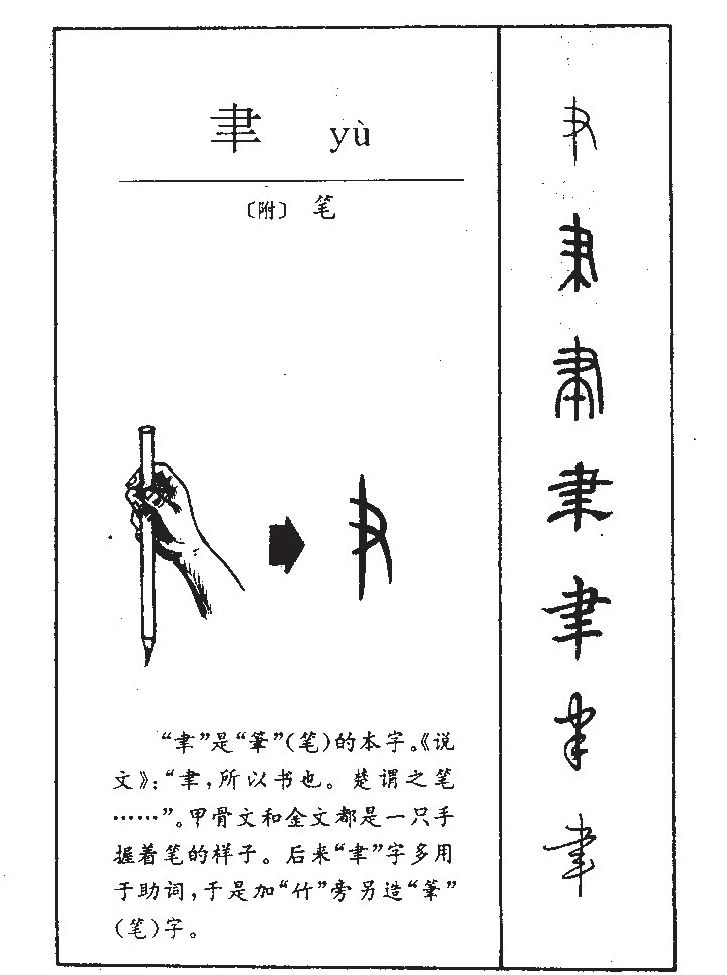
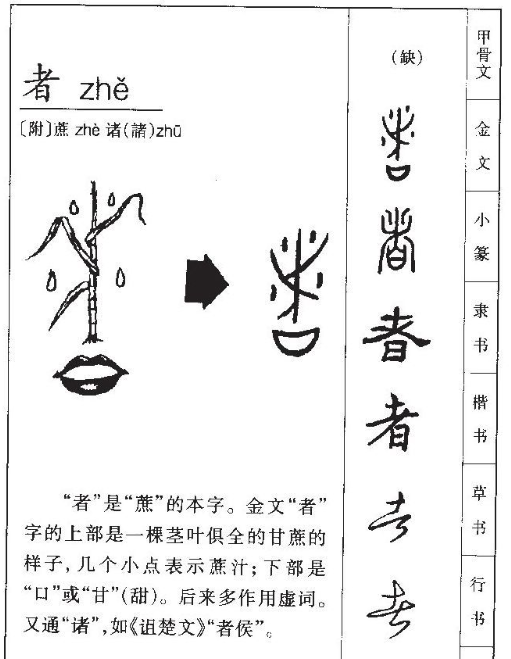
As an example the character for book (書) - is made up of 2 parts, the semantic part is 聿 (brush - in its original form a literal picture of a hand holding a brush) on top (so the word is related to writing or painting), and 者 on the bottom (the meaning of 者 is not important here (it was a picture of a mouth eating sugarcane originally, but lost this meaning long time ago), but 者 in Old Chinese was pronounced similar to the Old Chinese spoken word for book, so it serves a purely phonetic function here)
When Chinese writing was adopted in Japan, it wasn’t really used to write Japanese - it was used to write Classical Chinese. Literate people would translate from Japanese to Chinese (which they would have been fluent in) and write it down in Classical Chinese grammar and vocabulary, not spoken Japanese grammar. They could also read it back and translate on the fly into spoken Japanese for Japanese speaking audience. They also brought in the Chinese pronunciation of the Characters into Japanese (in fact several different versions of this over time - see Go-on, Kan-on, etc.) so the phonetic hints in the characters were still useful when learning the system.
Attempting to write spoken Japanese using Chinese characters was difficult, initially they would actually use Chinese characters stripped of their meaning to represent Japanese syllables. These were later simplified to become modern kana
Spoken Chinese itself evolved beyond the monosyllabic written Classical Chinese (which remained quite rigid), so for a long time, Chinese also wrote essentially in a different language from how they spoke. It was only fairly recently that vernacular Chinese began to be written (rather than Classical Chinese) with it’s polysyllabic words (most words in modern Chinese have 2 or more syllables, and require 2 or more characters to write, further distancing modern words from the original simple pictogram meanings)
So while the idea of some kind of universal abstract concept representation divorced from phonetics sounds intriguing, in practice it is a poor way to capture the complexity and nuance of spoken languages, and all languages (including Chinese) that attempted to adopt it ended up having to build various phonetic hints and workarounds to make the system actually useful and practical for writing.
yeah :)
you’re right
Yes, learning a few letters that form syllables and through that you can read words even though you don’t know what they mean is not practical, it’s better to learn a some thousand symbols and, if you don’t know a symbol at all, you can’t even say it out loud because you can’t read it.
Ideograms are the imperial units of language.China has an extremely high literacy rate, so the difficulty in learning the system is, at least, provably surmountable.
The strength of being able to unite communication historically across East Asia and potentially around the world is a pretty big plus. Offering such a strength impossible in other systems, ideograms are hardly equivalent to imperial units.
Oh yeah, if you start learning it when you are like 4yo and have high mental plasticity and see it everywhere around you everyday sure it isn’t a problem, but it doesn’t make the ideogram/logogram system any less convoluted, unpractical and arbitrary… one has to learn from 3000 to 4000 symbols just to be able to read most publications. You are right, it’s hardly equivalent, imperial units aren’t that bad
Just like using Arabic numerals were a huge improvement from Roman’s, the alphabet was a huge improvement from pictograms, ideograms and logograms
I’ve been enjoying studying Mandarin. The tones are a bit weird but the grammar seems surprisingly simple, everything can be written pretty universally in pinyin, and Hanzi characters are great for condensing information.
Hanzi characters are great for condensing information.
True, I will ask this: Why does it have 2 variants? Traditional? Modern?
Because languages change over time and every once in a while someone comes along who insists they can “fix” the language by making a bunch of changes. They are probably right and the changes, if widely adopted, will probably make the language more sensible. However, since one of the common features of a living language is that it changes over time due to usage, oddities will start creeping back in. And the whole thing will need to start all over again.
Fucked if I know 😂 I’m studying it on my own from textbooks and online resources, not in a classroom setting taught by scholars much much smarter than me. I assume the reduced complexity of simplified characters makes it more accessible though, which is why I understand the PRC makes Pinyin required on road signs as well.
Toki pona
Thus making everything open to interpretation

I’d honestly love to see something like that become an actual universal language. Simple grammar, sub 500 words, a little more meat on the bones to eliminate some of the ambiguity, but be easy enough to teach every kid in early grade school. Something that just allows basic communication and is accessible to everyone.
Don’t think it’s going to be an evolved toki pona though, it feels like most of its fan base just wants to keep it an impractical art hobby instead of allowing it to grow up to be something useful.
I stopped believing in toki pona when I heard somebody say that “watermelon” would be “kili telo” (fruit [of] water). It goes without saying that “kili telo” would not be understood as “watermelon” unless they had heard it in English before, or heard someone use the English-derived “kili telo”.
If you’re going to use English-language ideas to form words, then English is a prerequisite language for speaking toki pona, and toki pona becomes useless.I think if toki pona is developed as you describe, it could be much more useful than it is today.
Isn’t toki pona supposed to be an art language?
Is Esperanto similar to what you’re talking about?
Is Esperanto similar to what you’re talking about?
No, I think a true universal language is going to need minimal friction, and be as simple and vocab-limited as possible, to encourage mass adaptation.
For all its intent on being easier than other mainstream languages, Esparanto is still more complex than what I’m talking about.
Screeching 9600 baud modems. Now with more emotion!
Türkçe not gendered (at all, everyone and everything is “o”) and one of the easiest languages to learn
can you write an example, say, this message being translated to Turkish?
Bir örnek, mesela bu mesajın türkçe çevirisini, yazabilir misin?
I don’t think it’s as easy to see, but grammar wise it’s really simple. No articles (not even a “the”), there is no concept of “definite” and “indefinite” grammar wise. Things either are defined (my house, that house) or not (any house, one house, two houses) or it doesn’t matter (I’m going to house) grammar wise, no difference.
And really anything is made with suffixes, the only thing that I would consider problematic is remembering the correct order of suffixes. For example above:
çevir-i-si-ni
çevir(-mek): to turn around, exchange, translate
çevir-i: the thing that got turned around, exchanged, translated
çeviri-(s)i: the messages’s (turkish) translation, a genitive construct where message has the genitive ending (-in) and the corresponding possessive suffix (-(s)i) binds them together.
çevirisi-(n)i: accusative case, relating it to “writing”, i. e. write the messages turkish translation.There are quite a few rules governing vowels and consonants in suffixes but they are highly regular. There are very few exceptions that need to be learned seperately. (and even a lot those can be turned into rules, though I suppose at some point the difference hardly matters)
Sindarin
Lojban, or Toki Pona for shits and giggles.
Also note that script is historically mostly used for communication over large distances and times.
Historical scriptures (such as the bible) got transported across half the globe and copied and passed down for more than a thousand years. The scripture transcends both space and time.
If you only want to communicate with your neighbour, you don’t need a lingua franca. Lingua franca is exclusively for writing down, and communicating over very large distances (such as the internet). In that case, no pronounciation is needed. So it is possible to have an abstract sign language that doesn’t even have a standardized pronounciation.
This might sound absurd at first, if you never thought about it, until you realize that is how a lot of our information is already transported. There are a lot of sketches and visualizations of important data that are graphics, plots, charts, drawings, and such, that don’t have a standardized pronounciation. The information is transported visually.
Sanskrit.
Esperanto. Logical. Clear. Easy.
Mi amas Esperanton!