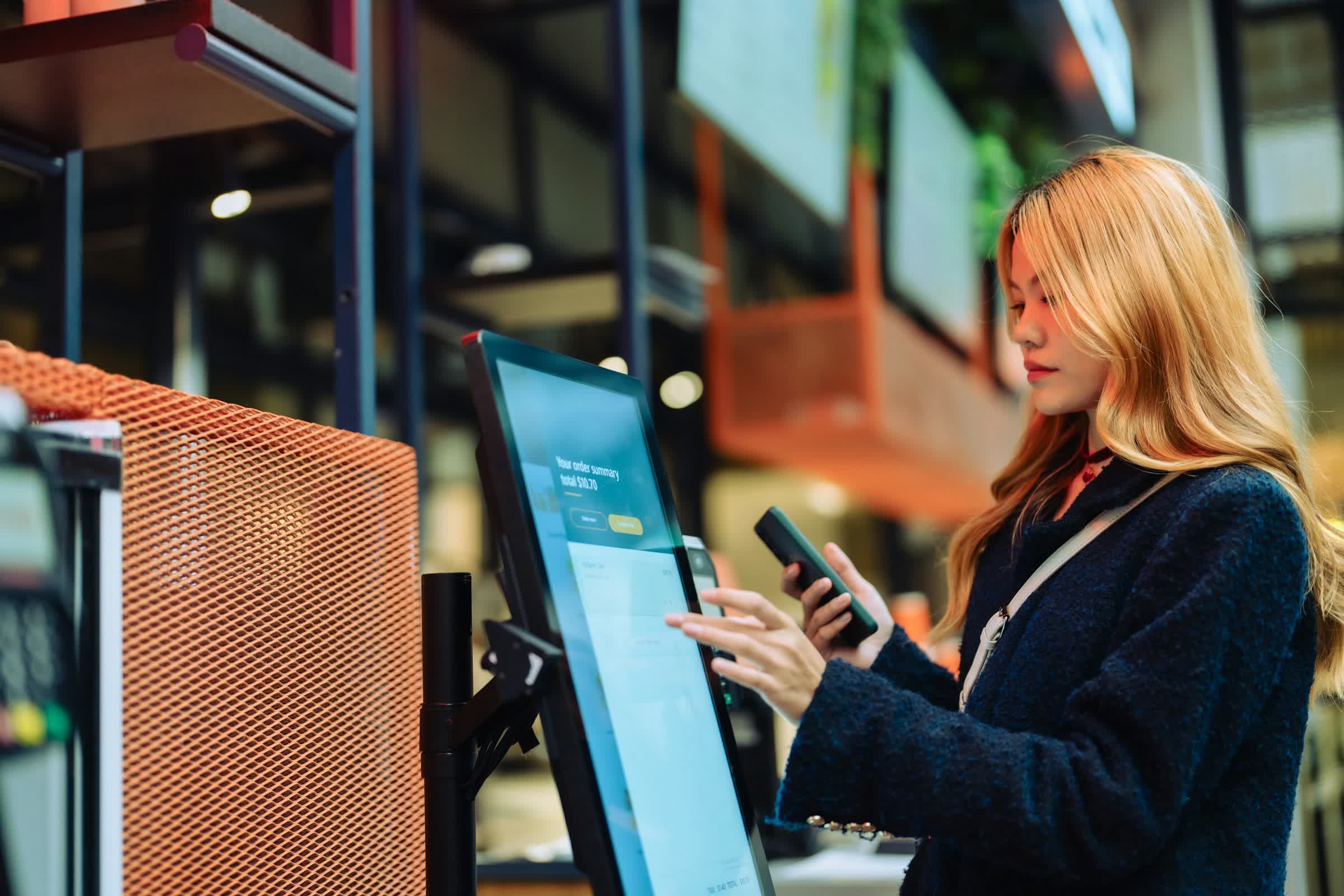
Only about one-third of surveyed retailers plan to invest in self-checkout technology this year, significantly fewer than in 2025, according to an annual retail industry report. While...
I worked at Target a long time ago as a Front End manager, before the days of self checkout. So I know how to cashier quickly and efficiently, and I get annoyed shopping at other places where the employees or customers are being slow.
I also appreciate just how volatile needs can be and how difficult it can be to staff. There have been books written on the subject, but in short for large stores with a lot of volume, customers do not usually trickle into checkout constantly as one might expect. Instead, they crash against the front of the store like waves. Personally when i’m shopping I try to identify these waves and time my checkout between them. At Target, we would often only have a couple of dedicated cahsiers, and would call the cart attendant or floor employees to help out for these waves. Self-checkout helps to smooth this out a lot and reduces all that walking back-and-forth.
I also hated all the upselling they made cashiers do. Target credit/debit cards and extended warranties on electronics. As an employee it was obnoxious and felt like we were annoying customers. As a customer, I was annoyed. One of my complaints about self-checkout today is how they ask you so many questions. My local grocery store self-checkout requires 5 button presses after i’m done scanning, which i think is bad design.
But also sometimes people need help. Some products are more complicated to buy. Some people are disable. Coupons are a plague upon society which machines are incapable of addressing. Some people just plain want a social experience, and it’s good to have human employees standing around in general. So I like the idea of having a mix.
And, of course, Universal Basic Income so we can stop asking “but what about jobs?” about every new innovation (but fuck AI though).
I agree, I have nothing against both being an option. In my bubble, everyone pretty much uses self checkout exclusively whenever available, except maybe for a large haul, so I was surprised to see how many in the comments actively dislike it.
That part about waves is interesting, it’s absolutely true and it happens all the time but I never really thought about it.
I started as a cart attendant, so I noticed that cars entering the parking lot would usually correspond with the traffic lights nearby. Pretty simple and straightforward.
What’s weirder is that most people exit in groups. Maybe not the same group they came in with. Some people might need to go Guest Services for a return. Some people would stop at Food Ave for a snack. Some used the restaurant. Some would peruse softlines (clothing) for an hour or two with multiple trips to the fitting room. Some would go straight back to the pharmacy for their meds. Some families would come in and split up. And there would be the occasional straggler checking out on their own, but there was an overwhelming tendency for several parties to all check out at once. Then they would form their own traffic leaving the parking lot.
I think some of it is subliminal. Once one group starts to check out, that starts to put the beeps of the register, the hum of the convertor belt, the clatter of items being moved, and the rehearsed conversations of a transaction to float through the air of the front of the store. My hypothesis is that customers shopping in the front who were close to done would have their decision to check out accelerated by this.
Some of it could be the result of all of the other psychological manipulation that happens in retail stores. That is a whole science of its own that I am only vaguely aware exists, but it is very likely that a contributing factor too.
Or it could be emergent from human behavior. For example, studies have shown that people will commute ~1hr max to/from work (I can’t remember the exact number, it might have been closer to 45 minutes). Doesn’t matter if they are walking, riding a horse, rowing a boat, driving a car, taking a bus, taking a train, or any combination. Once the time starts to exceed that amount, people either look for a new job or new home, and this has had an impact on the way that neighborhoods and cities grow over time.


I think a balance is good.
I worked at Target a long time ago as a Front End manager, before the days of self checkout. So I know how to cashier quickly and efficiently, and I get annoyed shopping at other places where the employees or customers are being slow.
I also appreciate just how volatile needs can be and how difficult it can be to staff. There have been books written on the subject, but in short for large stores with a lot of volume, customers do not usually trickle into checkout constantly as one might expect. Instead, they crash against the front of the store like waves. Personally when i’m shopping I try to identify these waves and time my checkout between them. At Target, we would often only have a couple of dedicated cahsiers, and would call the cart attendant or floor employees to help out for these waves. Self-checkout helps to smooth this out a lot and reduces all that walking back-and-forth.
I also hated all the upselling they made cashiers do. Target credit/debit cards and extended warranties on electronics. As an employee it was obnoxious and felt like we were annoying customers. As a customer, I was annoyed. One of my complaints about self-checkout today is how they ask you so many questions. My local grocery store self-checkout requires 5 button presses after i’m done scanning, which i think is bad design.
But also sometimes people need help. Some products are more complicated to buy. Some people are disable. Coupons are a plague upon society which machines are incapable of addressing. Some people just plain want a social experience, and it’s good to have human employees standing around in general. So I like the idea of having a mix.
And, of course, Universal Basic Income so we can stop asking “but what about jobs?” about every new innovation (but fuck AI though).
I agree, I have nothing against both being an option. In my bubble, everyone pretty much uses self checkout exclusively whenever available, except maybe for a large haul, so I was surprised to see how many in the comments actively dislike it.
That part about waves is interesting, it’s absolutely true and it happens all the time but I never really thought about it.
I started as a cart attendant, so I noticed that cars entering the parking lot would usually correspond with the traffic lights nearby. Pretty simple and straightforward.
What’s weirder is that most people exit in groups. Maybe not the same group they came in with. Some people might need to go Guest Services for a return. Some people would stop at Food Ave for a snack. Some used the restaurant. Some would peruse softlines (clothing) for an hour or two with multiple trips to the fitting room. Some would go straight back to the pharmacy for their meds. Some families would come in and split up. And there would be the occasional straggler checking out on their own, but there was an overwhelming tendency for several parties to all check out at once. Then they would form their own traffic leaving the parking lot.
I think some of it is subliminal. Once one group starts to check out, that starts to put the beeps of the register, the hum of the convertor belt, the clatter of items being moved, and the rehearsed conversations of a transaction to float through the air of the front of the store. My hypothesis is that customers shopping in the front who were close to done would have their decision to check out accelerated by this.
Some of it could be the result of all of the other psychological manipulation that happens in retail stores. That is a whole science of its own that I am only vaguely aware exists, but it is very likely that a contributing factor too.
Or it could be emergent from human behavior. For example, studies have shown that people will commute ~1hr max to/from work (I can’t remember the exact number, it might have been closer to 45 minutes). Doesn’t matter if they are walking, riding a horse, rowing a boat, driving a car, taking a bus, taking a train, or any combination. Once the time starts to exceed that amount, people either look for a new job or new home, and this has had an impact on the way that neighborhoods and cities grow over time.