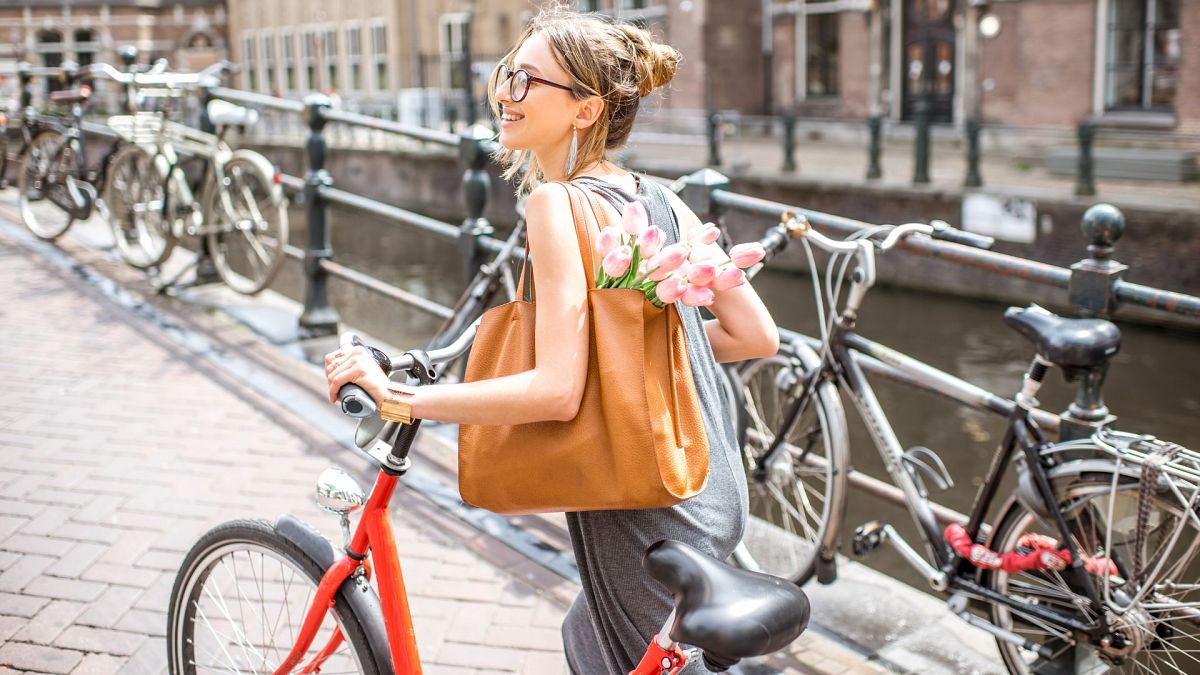
Dutch people cycle an average of 2.6 kilometres each per day. If this pattern was replicated worldwide, the study suggests, annual global carbon emissions would drop by 686 million tonnes.
This mammoth figure exceeds the entire carbon footprint of most countries, including the UK, Canada, Saudi Arabia and Australia.
Having to only go as far as the Dutch for travel would be helpful for transitioning to bicycles. The moment American city distances ( hundreds of km) are applied, everyone scraps bikes. Buses and trains and cars and planes become the conversation - bikes aren’t realistic for actual travel but nice for local commutes like groceries.
Spreading out like that was a deliberate choice on the part of American city planners. It was an unnatural experiment that failed, and which can and should be undone.
https://archive.strongtowns.org/journal/2015/1/7/americas-suburban-experiment
Cars have only existed for ~150 years, American cities are mostly older than that. Spreading out was a choice but it wasn’t because of cars.
At one point in time 100 years ago you could take commuter rail systems all the way from NYC to Cincinnati. Those systems were removed 1950s and then the bus companies that removed them ‘mysteriously’ stopped having so many routes (many were owned by GM…).
150 years ago, most cities were a bunch of unconnected small towns surrounding a central smaller city. They slowly grew together into the sprawl we have today.
The transcontinental railroad was completed in 1869 and again that’s not even talking about the commuter rail systems that I was mentioning before. You could take a train from New York to Philadelphia in the 1830s. Car companies want you to forget just how connected we used to be.
Uh…you can take a train from New York to Philadelphia today and it leaves like every 20 minutes. Two a day from New York to Cincinnati, but 19 hours. Car would be half that, airplane a fraction. I think it’s less conspiracy and more convenience…
They didn’t have cars or airplanes 150 years ago… but they did have trains.
I mean… It’s not like Dutch people use their bikes to go between cities (maybe sometimes, but they got buses and trains, too). The bikes are for local trips, which make up the vast majority of trips you’ll do. It sure helps that cities in Europe are laid out in a less spacious manner, but that’s not an unfixable situation for the US.
The car desert that is suburbia can be split into micro cities (perhaps with bike friendly trains) with a few local food supplies and necessary services. Far from impossible with a cultural mind shift.
I have regularly commuted by bicycle when living in The Netherlands, England and Germany and bicycles are really only for traveling inside the city not for going between cities.
Back when I lived in The Netherlands at one point I had a bicycle at home and another parked at the train station on the city where I worked, so I would commute to the train station nearest to were I lived using my home bicycle, leave it there, travel by train to a different city, pick up the bicycle I had there from the train station and use it to do the last leg to get to work. At the end of the day I would do the reverse.
Even having a bicycle to cover just 1 or 2 km is quite a time saver (easily turning a leg of a journey that takes 15m walking into one that takes 5m).
That said, I could do it like that because in The Netherlands there are proper parking places for bicycles at all train stations plus trains are pretty good.
When living in London (which at the time seriously lacked good conditions for cycling) I just used my bicycle to go from home directly to work, which was maybe 4km, took me around 23 minutes and was actually faster than using the Tube (the subway), whilst in Berlin it was sorta the same length of ride but from where I was living to were I was studying.
Obviously in all those places the bicycle was also useful for things like doing my weekly shopping (just get some bicycle bags).
Mind you, having a bicycle doesn’t exclude also having a car, though I never really got a car in Germany (I was there for 3 months only, living and studying in Berlin) whilst in London I actually ended up selling my car because it was just a massive money drain (especially because in the last place I had to pay for a garage) which I barely used since even without a bicycle, public transportation is excellent when living inside in or near the core of the city (so, Zone 1 - 3).
The Netherlands is also one of the flattest countries in the world. We should still all cycle more, but it would require much more effort to cycle 5km in San Francisco or the Himalayas than in the Netherlands.
People shit all over 15 minute cities. I miss it moving to Canada from the UK.
Why do they shit on them? I love them.
My guess is not enough bathrooms.
there is NO solution to climate change that doesn’t involve a > 80% reduction in car use (and banning flying) Even the IPCC has said e-cars aren’t an answer (they embed urban sprawl).
There’s is a persistent myth that we can’t inconvenience anyone, which is patently nonsense as the destruction of civilisation from climate change is more than inconvenient.
People are not going to give up their comfort. And that is the problem. It isn’t just cars it is rampant consumerism that is a problem and nobody is giving that up.
They are going to give up their comfort. They can choose to do it before civilizational collapse, or after.
Or - we could just say it’s illegal for these billionaire crybaby warcrime shitheads to fly like they do. Same emissions savings, and the world gets infinitely better.

Why is it always Taylor Swift and not like other top 100 billionaires which I’m pretty sure use way more than her
- Woman
- Celebrity
- Not a Nazi
So she’s a target
I will gladly use another meme if you provide one.
redesigning cities to be more bikeable (and less car centric) would have an infinitely better effect on your quality of life than stopping billionaires from using private jets tbh
not that we shouldn’t do both, obviously. we should prevent billionaires from existing in the first place even
Yeah there’s like 25 000 private jets in the world. This is scandalous, this should be 0 one way or another, but it’s not to scale with the problem.
And of course it’s your responsibility as opposed to the people designing infrastructure, the politicians approving their plans, and the corporations lobbying the latter
/s
I always say my “dream car” is good public transit and walkable cities with good bike infrastructure.
It might not work everywhere, but it’s a nice goal and it would have the secondary effect in America of making most of us a lot healthier.
I got 54kms to get to work every day and no place to park that’s safe between.
I would be happy as a Clam to save my morning run and go to my car but it’s not feasible unfortunately.
Maybe stop putting the buck on people trying to make a living and give it to politicians who fly privately or massive shipping companies.
Get an ebike
you want the mad max future
I don’t know how swearing at pedestrians walking in the bike lane more would help reduce my carbon emissions. Satisfying though.
Well in the USA that wouldn’t be a problem because people don’t walk, either
but what’s in it for the shareholders?
Strong legs?
I was hoping it would be weight loss via a certain device
Then build us cities like the dutch.
I’m not biking in 40C heat
Curiously, you don’t feel the heat as long as you’re biking. It gets hot when you stop.
We wouldn’t HAVE 40 degree heat if you biked.
And NOT biking is going to turn that 40 degree heat to 50 if you keep fighting it.
Bullshit. Personal vehicles only account for 8% of total greenhouse gas emissions. Plus I drive an electric and live on a green grid.
Your loss
I am strongly leaning toward beginning to take practical steps to someday move to the Netherlands because, even ignoring the ugly US political climate (which let’s be real, is probably not going anywhere good anytime soon), I came to realize as a bike commute lover that I will always be miserable in this country unless I relocate somewhere where I can bike more freely.
Sidenote: a vegan who drives has almost as low of a footprint as an omni who is full time car-free. So why not both? Whatever you can do for where your life is at, the more plants you eat and the less animal products, the more worthwhile you’ll find it to be.
But how do you capitalize a 200 year old technology?
The thing is, this is impossible at this time in countless locations.
But hey, I’d love some safer bike paths in my city. Can’t hurt to go this direction.
first off, i would just like to say that i completely understand you and i agree with you. But ironically, if everybody would cycle, the roads would be safer, so there’s that as well…
Cycling like the Dutch would cut the world carbon footprint by far less than replacing our entire power supply with renewables like the Dutch.
How about we do both?
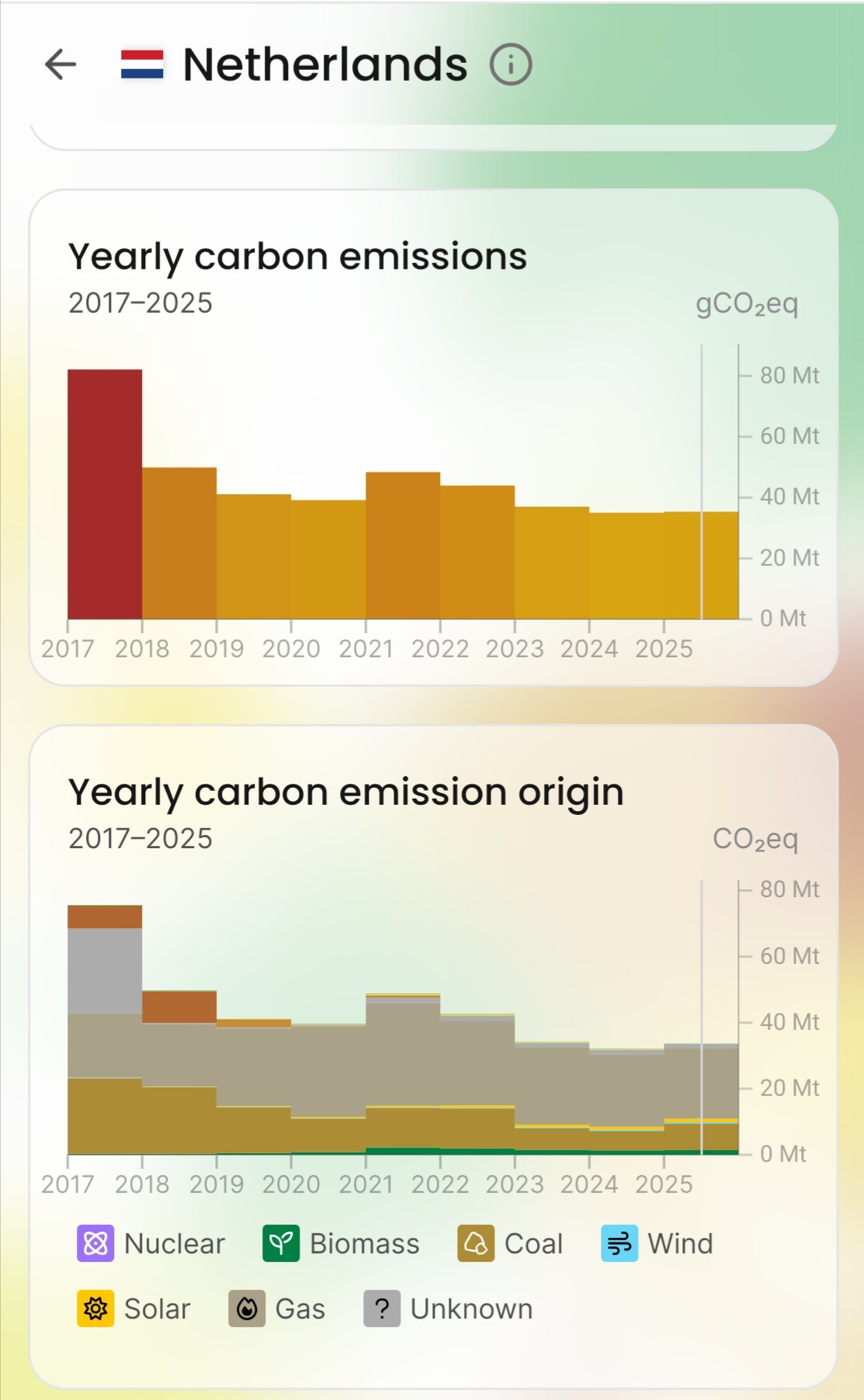
Meh. The Netherlands is doing better than we were (all new houses have to have solar panels, for example) but we still get a ton of electricity from gas, and even some from coal still. Most cars are still ICE (internal combustion engine), and efforts to reduce flights to Schiphol (are main airport) keep getting scuttled.
Countries with elevation are greener, because they have hydroelectric power (Sweden, Switzerland). France gets a special mention for being mostly nuclear, which is really good for carbon emissions.
Looking at the year by year emissions at this site is informative:
https://app.electricitymaps.com/map/zone/NL/all/yearly