China Achieves Mass Production Breakthrough with 360TB Glass Hard Drives
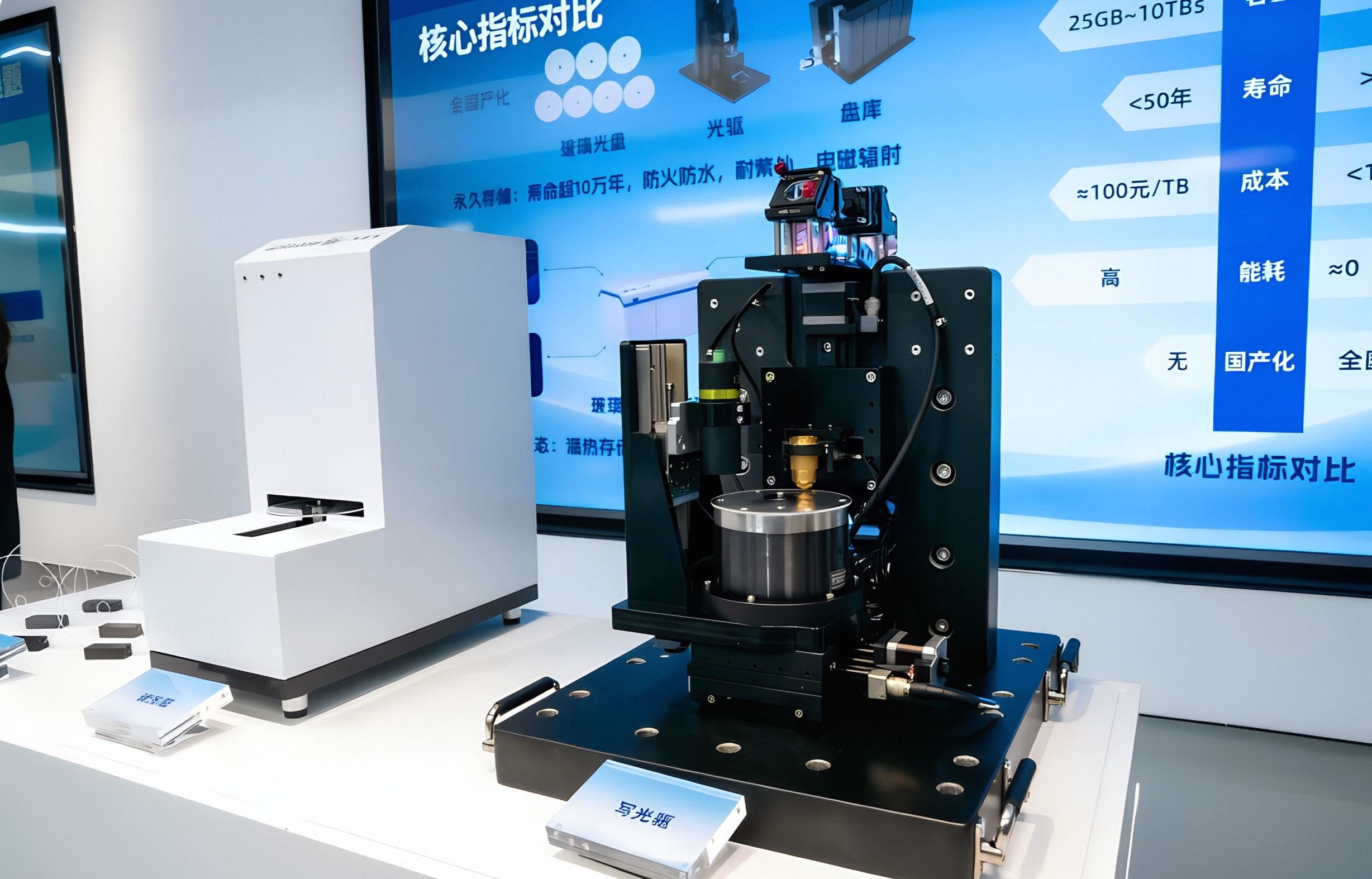
Researchers at Huazhong University of Science and Technology (HUST) have achieved small-scale mass production of glass-based hard drives, a breakthrough that could transform enterprise cold data storage. Each glass disc can store a staggering 360 terabytes of data across 400 stacked layers, using laser "carving" technology that writes data into the internal structure of the glass medium.


What form would that take? They seem to indicate lifetime on the centuries, similar to expectations for M-DISC.
Gonna guess glass deformation over time is going to come into play (really (like millennia) old windows get thicker at the bottom), probably why the quartz version of this is speculated to be good for millions of years. And of course breakage. The drives will fail first.
Sucks to be Microslop sitting on this for years and years and China comes along and eats your lunch. Ha Ha.
Hopefully a story soon to be repeated with RAM and then chips, about time there was real competition and innovation in this space, too many cartels due to high capex siloing. This looks more like CDs, could be everywhere in a few years.
Glass flowing to be thicker at the bottom is a myth.
Yeah, I’ve heard that and I’ve seen pictures of examples, dunno. Personally, anything beyond a century is irrelevant anyway.
The window panes were cut from irregular sheets, and they were simply installed with the thicker part at the bottom, for structural integrity.
It was a manufacturing quirk.
Like the other user mentioned, glass warping/deformation. Although I’d reckon kinetic impacts, tremors, or actual drive failure would occur first (the real question is what are the maximum tolerances before a read/write fails or ends in data corruption).