

1·
8 days agoI’m thinking about the mobile app in terms of how already. But it’s definitely on the roadmap.
I’m thinking about the mobile app in terms of how already. But it’s definitely on the roadmap.
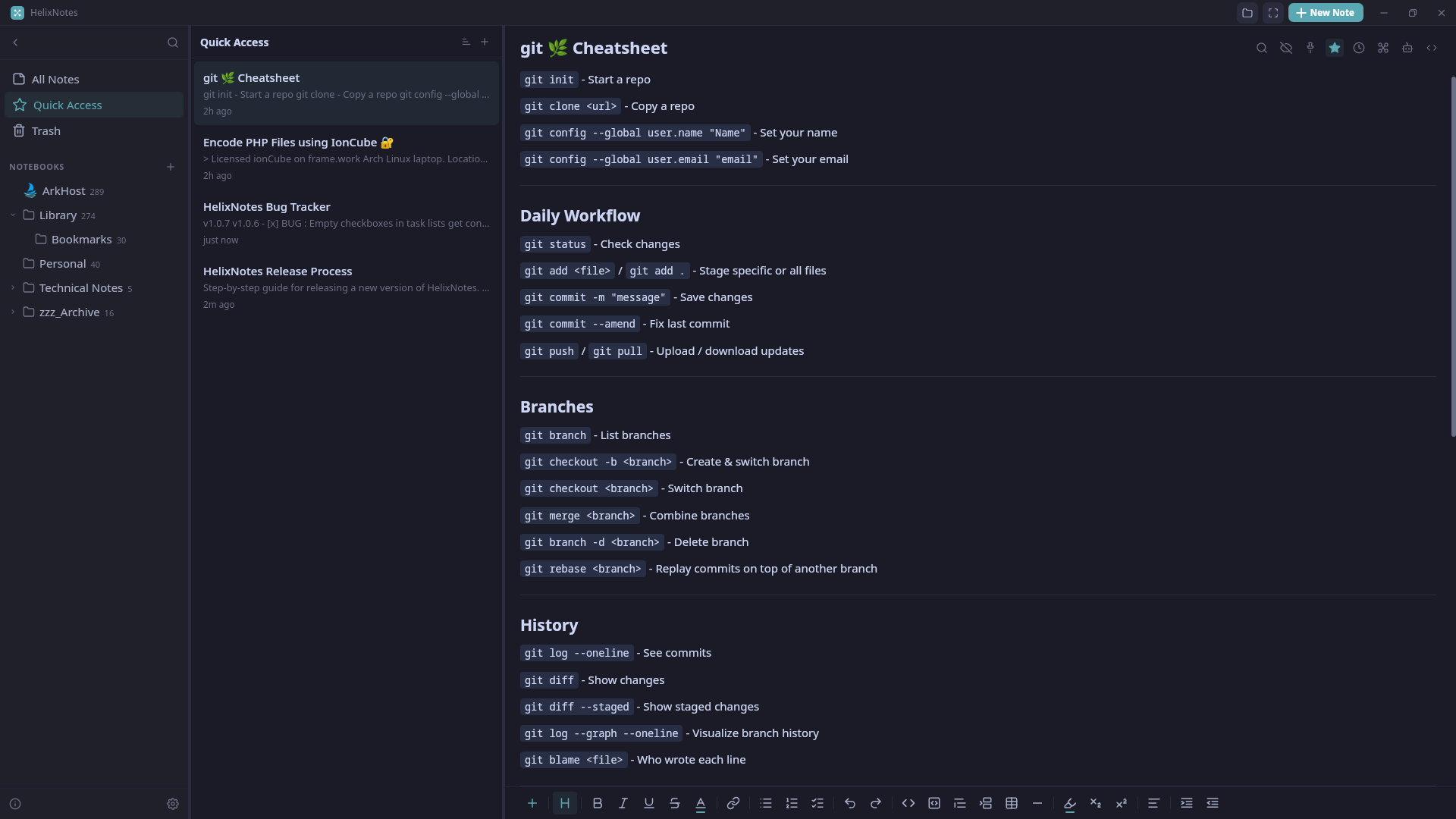
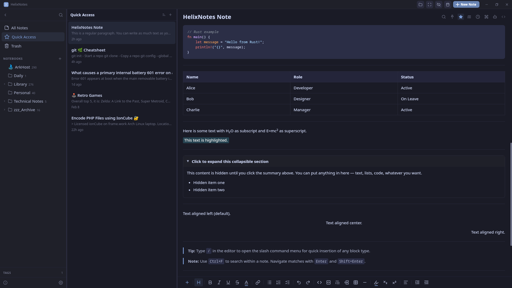
Obsidian’s default editor is barebones, you need plugins to get a usable experience. HelixNotes gives you rich editing out of the box: formatting toolbar, slash commands, source mode toggle. No setup. It’s also not Electron. Rust + Tauri 2.0 & Svelte fraction of the RAM, launches instantly. Same philosophy though: local .md files, no cloud, no lock-in. If Obsidian works for you, no reason to switch.
Thanks for all the feedback everyone. Just shipped v1.1.0 based on what was reported here today:
AI is optional, disabled by default, and doesn’t even show in the UI unless you enable it. The app works fully offline with zero AI involvement.

It’s just a naming coincidence. It has nothing to do with the Helix editor.
Known issue - the AppImage is built on Arch so it works on Arch, Fedora, openSUSE, etc. For Debian-based distros, use the APT repo or download the .deb directly
That’s exactly the way I do it. However, the mobile app is something that will be made in the near future.
You might be right. I will re-think this :)
Great feedback.
If you end up trying it and want to contribute, open issues on Codeberg for what you’d like to see. Contributions are very welcome.
Local-first means your data lives on your device as the source of truth, not on someone else’s server. How you choose to sync it - if at all, is up to you. That’s the point.
Sync works today with Syncthing, Nextcloud, or anything that syncs folders, notes are just .md files. Mobile app is on the roadmap.
Thanks! Latency was one of the main reasons I went with Tauri instead of Electron. HelixNotes launches instantly and stays light. Give it a try.
Yes, local-first markdown like Obsidian, but fully open source (AGPL-3.0).
Note linking with square brackets - yes, supported. Graph view too so you can see connections between notes.
If you don’t rely on Obsidian plugins, you’ll feel right at home.
Android is on the roadmap, but the desktop experience comes first. Still early days.
Not at this stage. It’s something I’m considering but the priority is getting the core experience right first.

I looked at Logseq, it’s a great project. Main difference is HelixNotes focuses on a clean WYSIWYG experience out of the box rather than an outliner approach. Different workflows.
Different use case. HelixNotes is for people who want a clean, simple note-taking app that works out of the box - not a customizable text processing pipeline. If Vim snippets work for you, stick with that. Not every tool needs to be for everyone.
Not yet, but it’s a straightforward feature to add. Open an issue on Codeberg and I’ll get it on the roadmap.
Good question. “No sync” means no built-in cloud sync - not that sync is impossible. Your notes are plain .md files in a folder, so you can sync them with Syncthing, Nextcloud, rsync, Git, or anything else you already use. The app watches the filesystem for external changes and picks them up automatically.
The philosophy is: I don’t decide where your files go. You do.
As for contributions - absolutely welcome. PRs won’t be rejected on principle. If you want to work on a self-hosted sync feature, open an issue on Codeberg and let’s discuss the approach first. I’d love to see it.
You just described why I built HelixNotes. Clean, simple, open source (AGPL-3.0), no bloat. Desktop is ready, give it a try. Mobile is on the roadmap once the desktop experience is solid.
Thanks, appreciate it!