

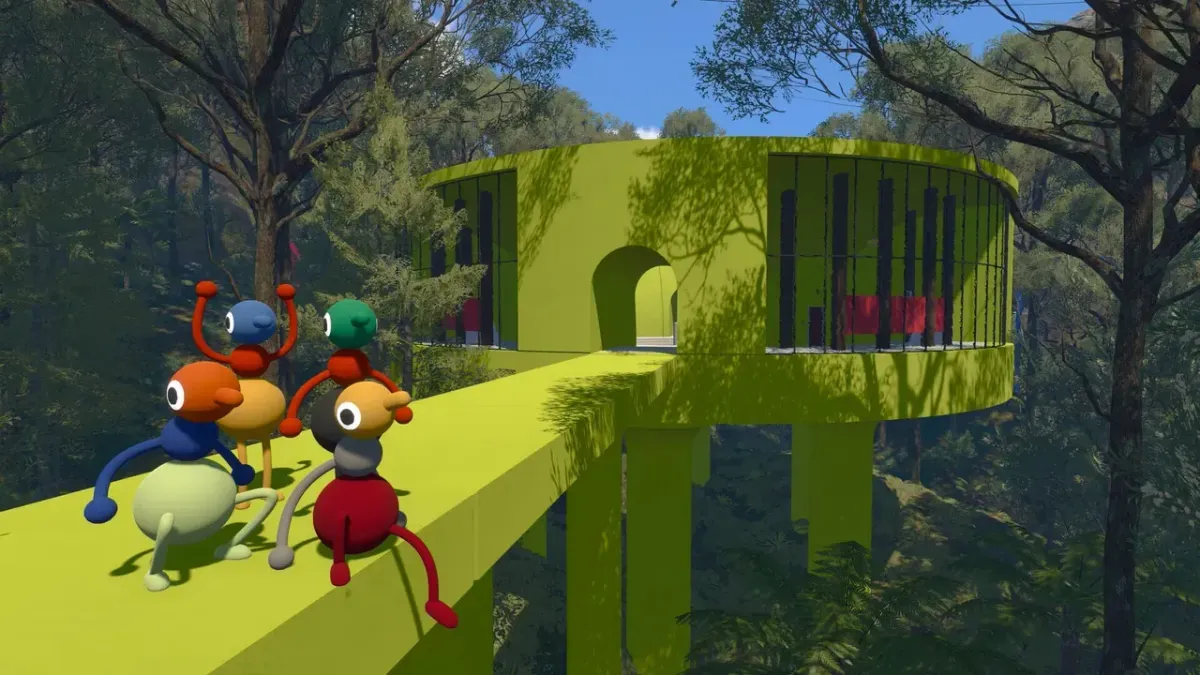
They don’t have an Ai disclosure on the Steam page: https://store.steampowered.com/app/1478500/Big_Walk/ Isn’t this against Steams rules?
I’d challenge the AI purists by asking where they draw the line. What if your developer uses AI to create every single texture and mesh? What if the entire codebase was built with AI assistance? What if the developer used AI to fix one single gremlin of a bug? What if they create all of their regression tests with AI? What if the developer needed one single refresher on some basic C code syntax and got an AI summary from Google - where AI never touched the code? What if one of their imported python modules that is only called once has a developer who created one single unit test with AI?
Are all of these really equally heinous?
While I wouldn’t consider myself an AI purist I do have different views when it comes to using AI for coding compared to using it for art or music.
I feel that expecting a game to be completely AI free when it comes to coding is pretty much an impossible task. Now matter how much you try at some point a developer will have to use a tool or library or whatever that were developed with the use of AI. Expecting them to audit everything they use would mean spending more time on that than coding the actual game or spending time developing non-AI alternatives. The genie is out of the bottle for coding and there’s no putting it back.
Now when it comes to art, music and music I personally am less accepting. AI has been trained on the art of millions of people around the world without their permission or offering them any compensation. That is unacceptable to me. It also feels very weird that people are trying to replace art with something generated by a machine, it feels soulless, each piece of human art no matter how simple has some meaning to the artist. AI just mashes it together with no rhyme or reason.
Now some people are going to say that I’m a hypocrite and coding AI has also been trained on the code of millions of people without them getting compensation or asking for approval. While that is true I think that for coding it’s different just for the simple fact that at the end of the day it’s just a set of instructions. There is code that could be considered art? I would say there definitely is but the vast majority of it is just telling the computer to do a thing in just slightly different ways. This is just how I see it and no doubt people are going to disagree.
I draw the line at using it personally. I can’t control everyone else using it but I’ll gladly prioritize the work of someone who put the sweat in over one that simply prompted a model.
To me the AI use has become tantamount to endorsing and accepting the problems it is creating. Once we solve the problems it has created, I’ll feel fine using it again.
it’s disappointing but i get it. these tools are meant to be alluring and addictive. i’d be lying if i said i didn’t give in to the temptation a few times, as much as i hate to admit it.
i still think it should be disqualifying for a game awards ceremony. if not, i worry that this could be used as a foot in the door by slopbros to further normalize ai use in games (and, in turn, elsewhere)
The primary use case for House House’s use of LLMs was to research, via chatbots, issues we encountered with third-party code. If you’re technically-minded, and curious, here’s an example. We needed to cull shadow casters by distance from the camera, but Unity URP only allows culling shadow casters by distance in camera forwards, so shadow casters behind the player were being rendered at an infinite distance. This made our game run 50% slower for around 20 seconds at sunrise and sunset. We researched the problem extensively, and we looked at the URP code ourselves, but we couldn’t find a way. Then, we were able to speak directly to an engineer at Unity, who asked around and ultimately concluded that what we wanted wasn’t possible. Finally, we posed the question to an LLM chatbot. After a few dead ends, it suggested a possible fix, and while we had to modify the suggestion extensively, it worked. This fix represented about 10 lines of code inside URP.
“Temptation” is one way to put it, I suppose, when the human experts tell you it’s impossible. This award’s criteria was already decided, and they’re entitled to their definition, but this is just information that was surfaced to them rather than work done for them.
I’m not sure this is a great policy. You can tell the difference between using ai for debugging and a whole game made ai slop. Nobody in that second category will be just sneaking by unnoticed.
But using ai in the final stretch to squash some bugs, that’s pretty hard to notice from the outside. If you outlaw the use of ai entirely, what do you get? People still use it for the little things, but don’t admit to it. Is that better?
All professional software development is using AI. This is normal and to be expected. Code AI contributions are rightfully handled differently in Steam’s AI disclosure.
Note how pretty much every major piece of software has gotten less reliable and less user friendly in the last few years. There might be a connection…
I forgot the golden role of “ai bad”.
AI is a tool. A useful tool for software development. But with any tool, it’s possible to misuse it. With AI it’s easy to abuse it and get it to write everything for you and not think about the output. That usually ends up with bad code. You can also use it for debugging or code review or giving a solution to a tough technical problem that can be used as a starting point. That’s how these devs used it. That is a good way to use the tool.
Just because corporations overuse AI in software development doesn’t mean the tool is bad.
There is, but it’s not AI alone. It’s mostly the C-Suite trying to drown us in it.


