Security personnel around the world are on high alert Tuesday following the discovery of eight TLS certificates with private keys so weak they could allow anyone to mint trusted browser and app credentials for any site on the Internet.
As of late morning Tuesday, browser makers and some major apps and programming languages had blocked all eight of the intermediate certificates. There are no reports of certificate transparency logs, which track the issuance of all browser-trusted certificates, showing the compromised keys being used maliciously. The threat remains far from over, however, because it will be hard and time-consuming to update other key parts of the Internet, such as Linux distributions and embedded and Internet of Things devices. One word: bonkers
The eight intermediate certificates belong to India-based certificate authority eMudhra Limited. An informal advisory published to emudhra.we-have-a-problem.com over on Tuesday posted the message “We have a problem here – Wayne.” The words were digitally signed using the private key of one of the eMudhra certificates. With proof that the reporting party had control of the key, defenders scrambled because the same key could be used to sign unauthorized certificates that would be trusted by millions of servers worldwide.
“This will be a massive cleanup job, bigger than Heartbleed,” Filippo Valsorda, a cryptography engineer and a cryptography maintainer for the open source Go programming language, told Ars. “There will be a very, very long tail, IoT devices, Docker containers, forgotten Linux machines, unmaintained CLI tools that shipped their own copy of the roots (which is common in some ecosystems, like Python). Also, Linux distributions are still rolling out updates, some of them are not ready yet, and then system administrators will need to apply them to a lot of machines.”
Heartbleed is the name of a critical vulnerability in the OpenSSL cryptography library. In 2014, it came under mass exploitation. Exploits let many unaffiliated hackers decrypt TLS-protected exchanges between parties. They also recovered private TLS certificate keys, session cookies, and passwords. The attacks compromised thousands of servers, some belonging to large companies and government agencies around the world.
Recovery required a long series of steps that took years. Steps included patching OpenSSL on all affected devices, reissuing millions of TLS keys, revoking old certificates, rotating passwords and session tokens and updating embedded devices and other forgotten systems—something that was extremely time- and resource-intensive, especially at Internet scale.
“Every time you need a lot of different people in different contexts to do something, it will take a long time,” Valsorda explained. “This time it’s worse because there’s more contexts, more people, and more heterogeneity.”
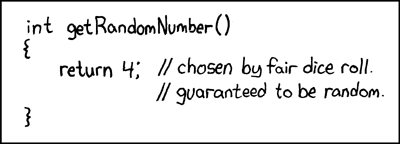
The compromised eMudhra keys were defective at a level that’s challenging the imagination of many of the engineers studying the incident. A normal size for a NIST P-384 elliptic curve cryptography private key contains roughly 384 bits of entropy, a size allowing almost 2384, or a number with 116 digits, different possibilities. The private key sizes of the compromised keys ranged from 3 to 8 bits. Astonishingly, the private keys were 4, 56, 66, 115, 155, 156, 230, 237.
“That is extremely in the ‘this should not be possible’ category,” Valdorda said. “Maybe some horribly dangerous key generation interface has a ‘size’ parameter and they set it to 1 by mistake???”
Ben Cartwright-Cox, director of BGP.tools, said: “My guess is that it’s example code that accidentally leaked to production, but hard to know. But it’s bonkers that no one noticed.”
At this early stage, the most immediate threat appears to be for those using VPNs, especially in countries with governments likely to maliciously intercept traffic. There are likely many other cases for concern. End users largely have no recourse other than to hold off using many non-browser forms of TLS communication until they receive assurances updates are in place.
As noted, most browsers have already blocked the intermediate certificates. The exception appears to be Edge, which at the time this article went live was still connecting to 12 vulnerable hosts. In response to questions asking why and if the company has plans to do so, a Microsoft representative the company will be in touch if it has anything to “share.” Meanwhile, Signal, WhatsApp, Wireguard, and other apps that don’t rely on TLS for confidentiality aren’t affected. This page and the emudhra.we-have-a-problem.com site show apps known to be patched so far.
The incident is the latest to expose a fatal flaw in the TLS regimen. It’s only as strong as its weakest link, which in this case was eMudhra. Fortunately, transparency logs account for much of that failure, but this measure requires parties to actively monitor massive feeds and works only after unauthorized certificates have been issued. eMudhra representatives weren’t immediately available to answer questions.
One caveat: exploiting compromised certificates requires an active adversary-in-the-middle attack, meaning the attacker must act as a proxy between two TLS parties and receive encrypted traffic, decrypt it, reencrypt it, and send it to the other party. Such capabilities, in some cases, are usually limited to only the most well-resourced attackers. People with control of a local network—at a coffee shop, university, or other organization—face much less of a challenge.
The private key sizes of the compromised keys ranged from 3 to 8 bits. Astonishingly, the private keys were 4, 56, 66, 115, 155, 156, 230, 237.
This is why the entire system of “just trust this random company, bro” certificate exchanges is broken at a foundational level.
Can someone please explain to Grandpa Erinaceus (me), what I should do in response to this? Is it just browsers and VPNs or other things as well? Maybe as in like 1) Don’t panic, 2) Update everything, 3) etc
- Don’t panic
- Update everything
- Don’t connect to untrusted wifi
- Hope every ISP you use has secure infrastructure that doesn’t allow MitM attacks easily, because the normal protection from that was these kinds of certificates (afaik, not an expert, correct me if I’m wrong)
For the laymen: update operating systems, browsers, and apps. And avoid doing sensitive stuff over Wifi networks other than your own (or from people or organisations that you fully trust, and the network must be password protected). Once this mess is cleaned up, the latter will be safe again. All you need to do for the cleanup is updating everything.
when i heard the news a few hours ago that “there is a TLS CA out there whose private key is the number 4” i wasn’t sure whether i should burst out laughing or sobbing
you can check if your browser is vulnerable at https://emudhra.we-have-a-problem.com/ btw
Firefox (nightly and regular) and duckduckgo is vulnerable on my phone. Brave and chrome are not.
I use ff so o hope they clean it up fast
Firefox showed all green on my phone, same as Chrome. Are tou maybe missing an update? Check the Play Store for updates.
Red for me, last update was the 19th with no newer update available.
Firefox updates certificate revocations without requiring an update of the app itself.
/cc @Ohh@lemmy.ml
I had to update firefox two times in a row. Second update didn’t show up until I searched for firefox in Play Store
Strange. Are you on Android or iOS?
Weird, FF is fine on mine