
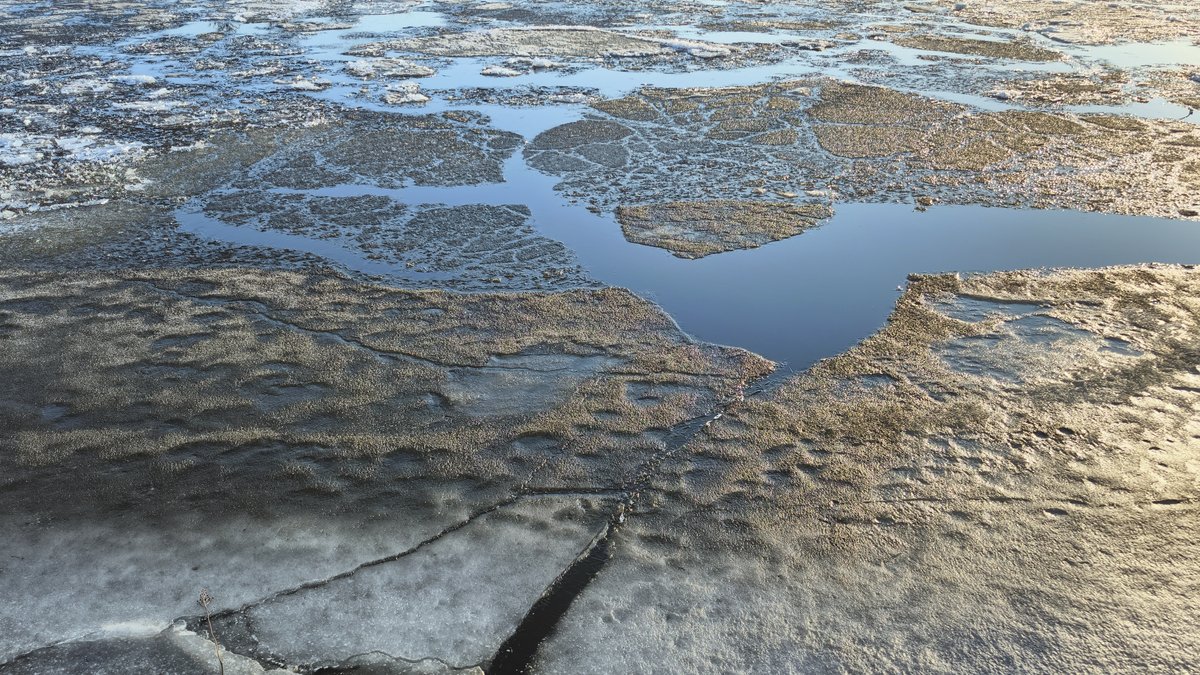
We did it ! We Terraformed a planet ! Earth, a planet that was exactly as perfect as it gets for us to live on it, we Terraformed it into a suffocating hell.
Technically we deterraformed Earth. Terraforming implies we’re making it more earth like when we’re doing the opposite.
Technically Earth is always exactly like Earth.
well, getting rid of the majority of humans will make it better for everything else, so there is that.
that we’re doing it to ourselves is gob smackingly stupid.
WOO! IN YOUR FACE, CYANOBACTERIA OF 2 BILLION YEARS AGO! WE DID IT IN RECORD TIME!
(2ish BYA cyanobacteria in the ocean produced oxygen, but nothing had yet developed protection from oxidation, thus killing almost everything living)
So that’s how they get their religious thing.
Just wait a few years, and soon we’ll see a hive colonies everywhere.
Imagine the futur, with underground cities sprawling deep under the surface, people living to mine the rare earth in devotion for the saint GPU !
Change has an effect in both ways, positive and negative, and unfortunately we tend to focus only on the negative.
SciAm unable to call out Big Oil.
They were just sold, and fired a lot of the better writers
That would explain it. Sold to which billionaire?
Scientific American was sold to LabX Media Group, which also acquired Discover magazine in 2024.
Layoffs were expected:
From Jeremy Barr @jeremymbarr
New: Employees at Scientific American magazine were told this morning that their publication is being sold to LabX Media Group.There will be layoffs as part of that process, according to a memo sent to staffers: “As part of that transition, LabX has evaluated the organizational structure it believes is necessary to support the business going forward. Unfortunately, this means that not all current employees will be transitioning to the new company.”
“It’s not been a decision that’s taken lightly, and it wasn’t certainly an easy decision,” a member of the Springer Nature management board (existing parent company) told employees in a meeting this morning.
SciAm staff tried to unionized in April with WGAE (Writers Guild of America East), but it seems that in the end, 15 staff were cut out of around 40, and union busting measures were taken by the new owners
As far as I was able to find, Bob Kafato and Ken Piech are listed as founders. Besides that, a quick search did not come up with too much information on their networth, unfortunately
In addition to LabX, the group includes Lab Manager, The Scientist, Technology Networks, Drug Discovery News, IFLScience, Discover and now Scientific American as far as I could find.
I sweat with minimal exertion - combination of a sedentary lifestyle plus SSRIs fucking with body temp regulation. Always thought I might be comfy in the arctic circle. So much for that, I guess.
To put that in perspective, these temperatures are on par for Orlando, Fla., at this time of year.
If you ever hear the phrase “on par with Orlando, FL” then you know shits fucked. Context is irrelevant
And then Earth ran a fever to try to get rid of the parasites. The parasites will have to adapt to survive, though, some were already changing to a less aggressive bleeding of the earth, in hopes that they will go out saying, “I bit the least!” before starving to death.
I just need to know how bad, how fast.
Mostly because I miss cigarettes and if I don’t need to have quit, I would like them back thanks.
Depends on if we’re talking peacefully buying them at the shop, or bartering for them in the ruins of civilization. It’s hard to tell for sure because there’s a bit of a multiplier effect in play when the Arctic seafloor starts heating up.
Also by no means is the Arctic the only big “threshold” around the corner.
If you ask me again tomorrow morning, maybe I’d have a more hopeful answer or platitude ready.
But this late at night? Smoke 'em if you got them. I personally already “un-quit”.
We live in interesting times. I didn’t expect it in my lifetime and was worried for my grandkids. Now I expect that we all will see a lot of disasters brought to us by burning fossil fuels.


