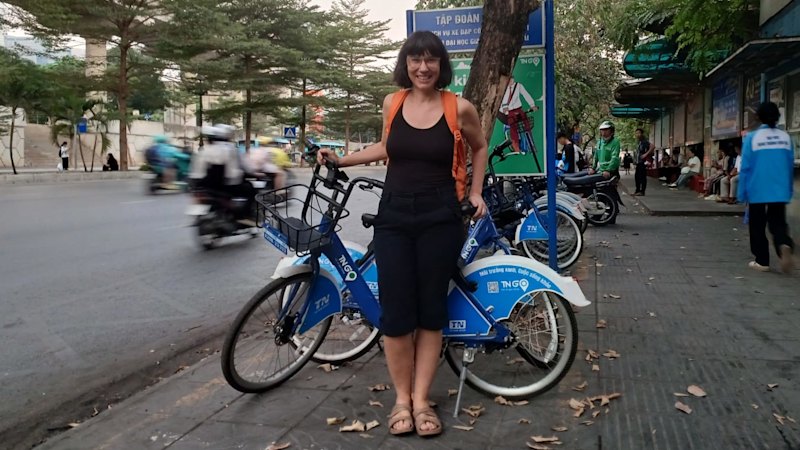
Article about an experiment from Brisbane, Australia.
“It demonstrates that in low-density, sprawling cities like Brisbane, people cannot be expected to permanently give up driving unless there is significant investment in public transport.”
However, researchers found given participants were likely to slightly reduce their reliance on cars, it showed experiencing car-free living, even briefly, could help people break away from automobility.
In Brisbane, 89 per cent of households own at least one car and 48 per cent of commuters drive to work.
This was essentially the goal of the study, to demonstrate that more investment is needed in public transport to increase public buy-in, and that even just being forced to try it for a few weeks increases usage and lowers car use longer term - so if there can be incentives to try public transport that could also increase its use long term and reduce cars on the road.
The headline is not what people here (myself included) wanna read, but the study succeeded in its demonstration and will hopefully drive positive govt policy outcomes.
will hopefully drive positive govt policy outcomes.
From the current city and state governments? Highly unlikely.
If services aren’t within 5-10 minutes maximum, people will not walk or bike there. That’s often greater than the distance just to get out of some neighborhoods.
If public transportation is not within 5 minutes or so, people will not use it.
The cost of a car can be under 10/day. If public transport is even half that for full day multistop use, people won’t use it.
I’ve been to Brisbane, it is really drawn out. A bit like LA. Tiny CBD, lots of sprawl.
A researcher asked people who live in car dependent areas to go without theirs for 20 days, none of them were able to overcome the poor infrastructure.
Fixed Headline for them.
I couldn’t do it where I live without just taking 20 days off work. I’ve got a grocery store a couple of blocks away so food wouldn’t really be an issue. The problem is that I work about 5 miles from my house down a road that doesn’t have sidewalks most of the way and you’d have to be crazy to ride a bike in a lane. There is no public transportation anywhere between my house and work.
With public transit, I’d have to walk / drive 5 miles to a bus stop, then hop across 2 seperate bus routes, then make it another 5 miles on foot or an uber or smth to get to work, for a combined 2 hours 40 minutes, assuming I uber the 10 miles where public transit is either non-existent, or goes too far out of the way that walking would be faster
Its only a 30 minute drive…
The same was done in Vienna. People did not use their car for 3 months.
Results
- 2/3 could imagine living without a car
- 25% have sold or are planning to sell their car
Considering it was founded, like, 2000 years ago, that isn’t really surprising. Turns out, being a pedestrian in a city which was established in a millennium when being a pedestrian was the norm is quite easy compared to the same effort in much more recent municipalities. Have you ever really paid attention to the plot of Who Framed Roger Rabbit?
Vienna is very walkable but also really big. The answer is, mostly, public transport, a lot of it and cheap. Public transport costs ~ 400€ per year if you have the annual pass for Vienna (you can use all public transport). Also at the moment a build out of bike lanes makes a combination of bike/public transport very interesting for big parts of the city.
P.s. Can’t really remember the plot if Rodger Rabbit.
The villain of WFRR was dismantling the trolley system in order to force people to buy cars and use the freeway system.
Fair point. We even maintained our 2000 year old skyscrapers here.

But you forget, that we’re living in forest cities with exploding trees!
That this idiot even got a single vote is beyond me…but well, who am I to talk with Kickl promoting the same kind of xenophobia.
But I’m getting a bit off topic, although all those conversatives world wide seem to love to be stuck in their cars in traffic jams…
Yes we get it it colonists living on stolen land have all the room in the world to be able to vroemvroem their fatass everywhere
20 days isn’t really enough to judge. If you didn’t own a bike at the start of those 20 days, could you really get a bike and all the clothes, safety gear, etc. you need and get used to biking before the end of the experiment? If you’re using public transit, can you really learn the routes and schedules for the places you need to go in just 20 days?
Also, assuming these people all owned cars, they were still essentially paying for their cars the whole time. They might not have paid for gas, and the wear and tear would have been very slightly less, but any car loan they had still had to be repaid on schedule. If they rented a monthly parking pass or something, that would have to be paid. Not only that, but when you don’t own a car, you tend to make different decisions on where to live, and sometimes where to work too. So, they’re living in a place that’s car friendly (and maybe not public transit friendly).
I would bet that if you took someone who didn’t own a car and intentionally lived next to a major transit hub and asked them to get around by car for 20 days, they wouldn’t like it either. They wouldn’t have a place to park at home, rush hour traffic would probably be extremely stressful for someone who didn’t do it every day, and so-on.
What this really needs is something like what you get in one of those “wife swap” TV shows. Someone goes to live in a completely different place with people who live very different lives. Instead of living in the sprawling suburbs and getting around everywhere by car, you now live downtown in a high-rise right near a great public transit location. In addition, calculate how much someone would save without a car, and give that to them as a cash payment every day/week so they understand that positive side of not owning a car as well.
You only need special clothes if you are a wanker, everyone else just wears their normal clothes
Wankers is quite harsh
Let them feel sexy on their bike, if they want to
Ive been car free my entire life and I will continue to do so for the rest of my life
Same here!
Or until you start a family.
Ah yes, I forgot it’s impossible to ride public transport with kids…
Public transport has routes and stop where they are planned to stop.
Maybe you’re lucky and it will not be far from every of many places you have to be that kids can walk the rest of the way.
I knew 2 people who definitely wouldn’t get a car after getting a kid.
First one got a car almost immediately because difficult.
Second one took about a year. She ran out of people to guilt people in helping the poor single mom.
Our systems are not perfect, you can ask people in wheelchairs how difficult they have it to get around.
And I see a lot of cargo bikes now, sometimes with 3 kids.
All great in theory.
But our bike paths were not designed for these relatively huge things. It creates dangerous situations.
Not to mention how fast they can go since all of them are electric.
I’m car free with 2 kids. Everyone thinks it’s harder, like kids like driving in traffic. No, it’s not. We do local things or get public transport. No parking hassles.fine to have a drink with lunch.
i have a family. living with a small child in an american city without a car is entirely possible. you lose the ability to go out (either to city or to nature) but with a small child you don’t have time to do that anyway so you might as well pay more to live closer to your job. alternative is paying the difference in rent for a car loan and loosing the time you don’t have while sitting in traffic. big caveat: this works only if you earn enough to be able to afford living close to a city center in the first place. also, it is still way less comfortable than a life in a developed european city.
alternative is paying the difference in rent for a car loan
Why do you have to take an expensive loan to get a car? Is there no used car market in US? I live in a bit different reality, and here there’s thriving market at any price tag. You have to do the research, pay for paint thickness check to ensure car didn’t get wrapped around a tree, but getting very cheap used car to drive your ass from point A to point B is absolutely a thing.
Nah US has used cars, got mine for like $6000 a few years ago when prices were kinda high.
Also you, probably: “There are no atheists in foxholes”
Yeah, that’s bcz most towns/cities are not set up to be walkable. And nobody wants to carry groceries miles back to their house. We’ve set up society in a way that not owning a car is a nonstarter.
They don’t have miles in Brisbane.
It’s not our fault they’re poor.
They’re rich in SI units
A mile is a mile no matter where.
You’re in an international community. Why not use a standard unit of measure?
I’m not the person who originally made the ‘mile’ comment, but surely you can give grace to somebody using the unit they are most comfortable with when making a generic statement. Like if a Brit used the word “colour.” We get the point.
Of course, the argument that metric units should be used everywhere has merit, but way way way above the level of an internet post.
They weren’t using it to describe a specific measure, just to express a general sentiment - why take this one so personally?
Just trying to stop the further Americanisation of the internet.
The US did… develop it, it’s more the de-americanization of the internet, which itself is a noble goal sure. But while it’s a good goal to strive for, 50% of the internet is english - and of english language speakers, 23% of them are from the US. It’s probably much more useful for you to focus on promoting the use of non-US tech companies / social media / web services than to try to enforce the purity of casual language.
The “internet”, yes. But the web, http, etc was all invented by the English. You guys can claim email if you want.
I’m on a non-US instance of Lemmy on a post about a non US city.
deleted by creator
“However, researchers found given participants were likely to slightly reduce their reliance on cars, it showed experiencing car-free living, even briefly, could help people break away from automobility.”
I think this is an important secondary take away here. Reducing car use is still much better than continuing at current rate. (Similar to eating less meat vs going vegan cold turkey).
Owning a car does come with large sunk-costs tho - so you won’t feel the full financial benefit from just reducing car use (still have to pay rego, insurance, maintenance etc.)Brisbane is a shit city for cycling. Who is surprised?
I think this small experiment simply demonstrates that ditching cars is not a matter of personal preferences, but a community effort
The system is rigged. If you’re dependent on the bus in a city where everything is miles apart, the buses run every hour and only daytime hours, of course it’s going to suck.
I remember in Australia, trying to meet my friends in the city center. I had a bus scheduled every hour, sometimes it didn’t come though, so I could be waiting over an hour for the bus to take me to the nearest train station. The train was every forty minutes, so it would easily take me two hours to get there. Then I had to hope they showed up too.
I later found I could bike and it would take about an hour.
The average claim per person for all their travel expenses during the experiment in Brisbane was $125 – but they saved $300 in car costs. “I hadn’t realised how much money my car eats up,” a 43-year-old man from Brisbane said.
Those $300 for 20 days look like just fuel costs. Add the yearly depreciation value of the car (especially bad for new cars), insurance and maintenance costs and it gets even worse.
Even limiting oneself to only a financial viewpoint (which is quite reductive since the are also big Environmental, Health and Social costs), for most people (especially those who live in cities) cars are stupidly expensive for the utility value that they deliver.
Hopefully they got action items out of it - what do they need to work on.
Personally I loved the freedom of not having to deal with a car on a daily basis, but there was too much I couldn’t do.
One of the shortcomings that seems to surprise people is a lack of long term car storage. There will be an extended transition where many people can not give up their cars or think they cannot. Why not help with that? At one point I was driving my car mostly to move it for street cleaning because there was no permanent place to store it. We want the cars off the street to make room for more important road users. Garages in apartment blocks are too convenient and for-profit garages too expensive
You’ll get more people willing to try car-free if you give them a slightly inconvenient place to store their car, until they realize how little they need to use it. I wonder if making it cheap and easy to leave your car at a park and ride at the end of a transit line would work
I used to do this when I lived in New York state and would occasionally travel down to New York city. It was stupidly cheaper to drive (and faster - which WTF whhhhhy). So I would rent a cheap spot in a garage near the outskirts of the city for the day and use public transport for the rest of the day. I remember being mad that it was cheaper and faster to drive and pay to store my car then it would have been to take the train. That’s a problem. Especially when I had a train station in biking distance to my apartment at the time.
I mean, if you search around you can probably find someone willing to rent out driveway or garage space for cheap. Or else if you head to the outskirts of your city or near the industrial areas, you’ll find car/rv storage lots - usually near or part of storage units. So the solution already exists.
I think it’ll be a hard sell to get people to, say, approve government subsidies for parking garages to make it cheaper for people to store cars that they arent even using. Especially if street parking is already free
The point would be to remove/recover street parking for more important uses. Especially in older urban neighborhoods you might have really narrow streets, no room for bicycle or bus lanes. This lets you compromise: car is still possible for those who need it, but less convenient so used less, neighborhood streets have reduced traffic and can be opened for cycling or pedestrians
I mean, if the point is to remove street parking, I’m in favor of that.
I don’t think there should be any real government intervention to then create additional parking, though. Seems like a move in the wrong direction.
What I think would be good instead, though, is ending parking minimums and then declaring that businesses cannot restrict who parks in their lots to only customers. They can charge a fee for the use of their lot, but otherwise anyone can park there for any amount of time. This would vastly expand the amount of long term parking, drastically driving down the price, while also incentivizing landowners to now redevelop their parking lots into something useful
The Brisbane public transport is pretty bad, but there are more reasons: the bus network is owned by the council while the train network is owned by the state government. As a result both tend to compete with each other. This is especially bad when the busses don’t even cover some areas. Partner went for a course there recently and their best option to reach the place on public transport was to just walk 40 minutes from the train station! I can’t think of a single area in Sydney that wouldn’t get a bus service at least once a day on a work day. (You know things are bad if you’re comparing to Sydney busses because these things are terrible)
NYers’ “I’ve been doing this my whole life”