If you read the article its actually a bit of both clothing manufacturers and increasing waistlines. Clothing sizes increased about 2.5" while waist sizes increased by 4". Its an issue of the clothing manipulating sizes to sell more clothing and the effects of modern processed foods and diets coming together. Clothing gets harder to sell as the size increases so they bump up the sizes to try to keep up with increasing wasitlines without shifting their sale strategy status quo too much.
The major flaw in this argument is that the size increase of clothing is compared between 1995 and 2021.
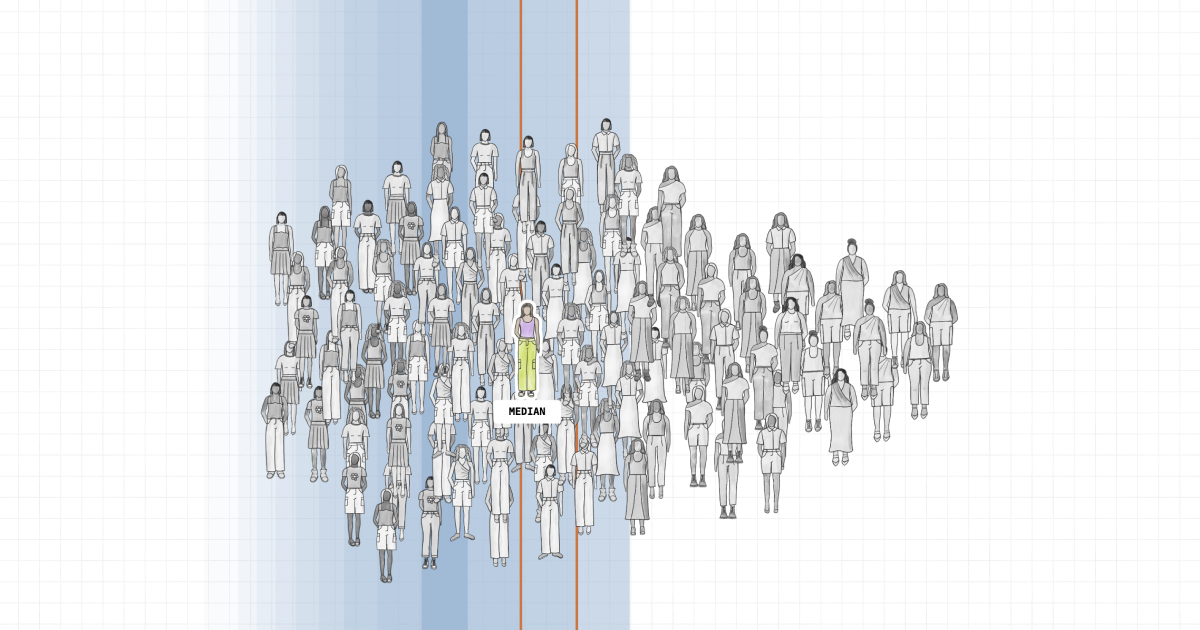
If you look at the distributions comparing women’s sizes between the ages of 15 and under, 20-30 years, and 30+ years old, you’ll notice that women naturally gain weight as they age.
At the same time, the market share of fast fashion has grown by over $100 billion in this time span. Currently, women in the 30+ cohort have the most purchasing power. This means that older women are able to buy more clothes, and older women tend to weigh more.
Clothing sizes for women are not standardized like they are for men. You don’t get to walk in and pick a 33x34 and leave. Women have to try a spread of 3-5 sizes, because every company has its own size, and women’s waistlines can vary up to 5"+ because frequently bloat due to periods. Add in the fact that women’s waist lines naturally slowly go up as they age, and you get the impossible task of knowing exactly what your size is when everything is conspiring to make is as difficult as possible.
The first comment assumes that women are choosing smaller sizes out of vanity, when in reality it’s because it’s impossible to know what your size is due to non-standard sizing and the fact that you need to estimate how your fit will be when you’re not bloating, and your size on an average day creeps up as you age.
Companies are quietly taking advantage of this because a woman will not suspect much if she wore a size 8 in her 20s and wore a size 10 in her 30s, when the reality is that her size 10 is actually a size 12 by former standards.

If you read the article its actually a bit of both clothing manufacturers and increasing waistlines. Clothing sizes increased about 2.5" while waist sizes increased by 4". Its an issue of the clothing manipulating sizes to sell more clothing and the effects of modern processed foods and diets coming together. Clothing gets harder to sell as the size increases so they bump up the sizes to try to keep up with increasing wasitlines without shifting their sale strategy status quo too much.
The major flaw in this argument is that the size increase of clothing is compared between 1995 and 2021.
If you look at the distributions comparing women’s sizes between the ages of 15 and under, 20-30 years, and 30+ years old, you’ll notice that women naturally gain weight as they age.
At the same time, the market share of fast fashion has grown by over $100 billion in this time span. Currently, women in the 30+ cohort have the most purchasing power. This means that older women are able to buy more clothes, and older women tend to weigh more.
Clothing sizes for women are not standardized like they are for men. You don’t get to walk in and pick a 33x34 and leave. Women have to try a spread of 3-5 sizes, because every company has its own size, and women’s waistlines can vary up to 5"+ because frequently bloat due to periods. Add in the fact that women’s waist lines naturally slowly go up as they age, and you get the impossible task of knowing exactly what your size is when everything is conspiring to make is as difficult as possible.
The first comment assumes that women are choosing smaller sizes out of vanity, when in reality it’s because it’s impossible to know what your size is due to non-standard sizing and the fact that you need to estimate how your fit will be when you’re not bloating, and your size on an average day creeps up as you age.
Companies are quietly taking advantage of this because a woman will not suspect much if she wore a size 8 in her 20s and wore a size 10 in her 30s, when the reality is that her size 10 is actually a size 12 by former standards.