

cross-posted from: https://lemmy.zip/post/59925291
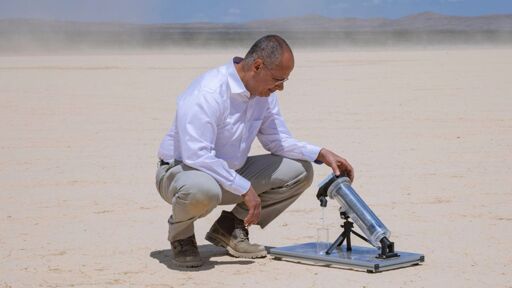
The system can function in air with 20% humidity or less. But these 1,000 liter a day machines are not small, at around shipping container size.
cross-posted from: https://lemmy.zip/post/59925291
The system can function in air with 20% humidity or less. But these 1,000 liter a day machines are not small, at around shipping container size.
MOFs and other types of materials are actually a highly well researched topic. They’ve been around for decades! However in the current state of things, it’s kinda like battery technologies we see. It depends on the scale of manufacturing that these researchers can scale up production to.
Alot of time, the processes researchers do to manufacture small batches to produce a small prototype don’t work well when scaling up. The team I was working with had lots of trouble with it, but eventually settled into producing batches that would fill approximately a construction bucket worth at a time. Not a huge amount, but definitely a starting spot. It not mpossible to assembly line something like a millions of buckets a day, but at the same time your manufacturing costs go up alot.
There are many different competing kinds of water-from-air materials. These researchers use MOFs, but since they use metals, the cost to manufacture goes up significantly. Polymer based materials are a bit more “secret sauce” depending on the formulation, but they’re simpler in the sense you can use specific kinds of salts. The cost difference is something like 10x, so MOF really needs to produce 10x more value, otherwise it’s not worth it.
Since water is such a commoditized product, commercial prices are somewhere around a few dollars per cubic meter of water. When you design something that has to compete with existing products, you have to have a cost at, or less than existing prices. Either your panel has to be super cheap, or your water production has to be off the charts.
Let’s say a commercial water-from-air solar farm lasts for 30 years. Each day, 1sqm of panel produces 1 cubic meter of water. You’re only selling that water for $3 (approximate commercial rates). Over the lifetime of the panel, your income is 30years * $3 = $32850. It’s a big number! A realistic current figure for water production at best would hit 0.01 cubic meters of water. Holey cow! Now you’re actually making 1% of our original target, which is 3 cents per day, or $330 over it’s lifetime.
Selling anything that’s 1m^2 for only that price point is a crazy feat to achieve. I designed a number of systems that would try to enable that, but you must also factor in everything including installation and maintenance costs.
There’s billions of dollars thrown around to invest in these technologies. The only thing stopping it are the unit economics. You have to compete in an industry that is centuries old. But these can succeed, they can easily replace every single water filter in the world.
Thanks! Very cool tech
Happy to help! It is really a cool technology, but with alot of nuances. It certainly can do what they claim, but for now only in controlled environments. I got pretty close to testing a real cost effective solution, but I couldn’t see it through due to extraneous circumstances.