- cross-posted to:
- science@beehaw.org
- cross-posted to:
- science@beehaw.org
You must log in or # to comment.
Light bulb is a Reverse solar panel
One watt per square meter. Not very useful.
You’re getting downvoted for pointing out that this technology, at optimal efficiency on Earth, generates about 1/100,000 the power of a solar panel. “Not very useful” is an understatement (it’s currently fucking useless). Even worse: the title saying “at night” implies a terrestrial usage and misdirects from this technology’s only potential useful application in the future once and if it becomes much better – namely on deep-space missions.
This research is interesting. I hope it yields something useful. Your comment is still 100% correct for the foreseeable future.
Edit: I was conflating the optimal efficiency of 1 W/m2 and the actual efficiency of 1/100,000 the solar panel. Sorry for introducing that confusion.
That 1/100,000 comparison doesn’t seem right if these panels generate 1W per square meter as the parent poster said. It sounds like you’re saying regular solar panels generate 100kW per square meter but I’m pretty sure that’s orders of magnitude too high. Am I misinterpreting what you said?
Agreed. It’s 1/100 with old panels at 1/300 with modern high performance panels, being up to 300w/m.
Edit: solar radiation is only 1.3kw/m2
Edit: solar radiation is only 1.3kw/m2
Outside earths atmosphere. Only ~650 Watts/m^2 reach the surface of our planet.
Edit: I posted regurgitating some simplified assumption from a text book or something I must have read in the past, the 650 W/m² is wrong.
Clearly you don’t know how much longer sketchy hallways get in the dark. It’s at least a 20 fold increase.
Could be good enough for light in dark places
But… yes
Generally not enough. But maybe with more work they could become better
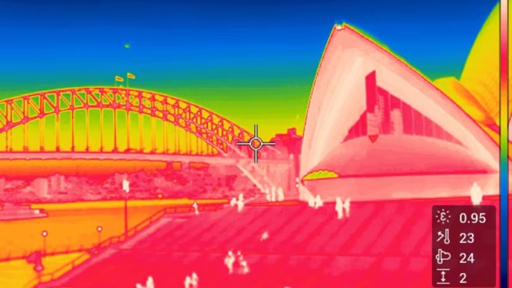
The system takes advantage of the heat difference between Earth’s surface and the night sky, with the ground radiating much of the heat it captured during the previous day.
It’s not a reverse solar panel. It’s not a solar anything. It requires a difference in heat… So it generates electricity in the same situation that a sterling engine uses to generate motion. Could you put one on a diesel generator to turn the waste heat into more electricity?
Does it have anything in common with
those weird little solid state heat exchangersPeltier elements? Wait, are they actually, literally peltier elements?It’s not a reverse solar panel. It’s not a solar anything. It requires a difference in heat…
The solar part is because the Sun is responsible for the heat differential.
Then you could argue wind energy is just solar energy because wind exists due to heat and thus pressure differential
So its a giant sterling engine?
Or it’s a panel optimized for exploiting infrared light.
This has more in common with a thermocouple than a solar panel.
The thing about deep space is confusing. Where is it dark for long periods in deep space?
everywhere
At night…
Could be interesting if the technology paves the way for more efficient Peltier-like devices
Yeah, that’d be great. Peltiers would be awesome and everywhere if they were dirt cheap.
thermoradiative diode sound more like perlier panels than solar panels