You must log in or # to comment.
What the actual fuck⁈ “Batteries can catch on fire.” Sure, whatever could go wrong with a 1000l tank of FUCKING GASOLINE.
AAAaaaaHHhh I hate people!
Going with the “batteries catch on fire argument” is stupid. “Batteries are heavy and expensive” is probably more compelling. But yeah, wires are better solution for things going in fixed routes.
Yup batteries are not the way. By the time the batteries need to be replaced you might have helped slightly but probably not. Batteries is a illusion to going green right now. Just another product that has a demand and an easy market for it.
I think we’re all aware of the costs associated with recycling batteries.
Are you aware of the costs associated with high CO2 levels?
Have to choose the lesser of two evils.
Gasoline and diesel can be extinguished relatively easily. Extinguishing an EV means throwing it into a tub of water for a day or two
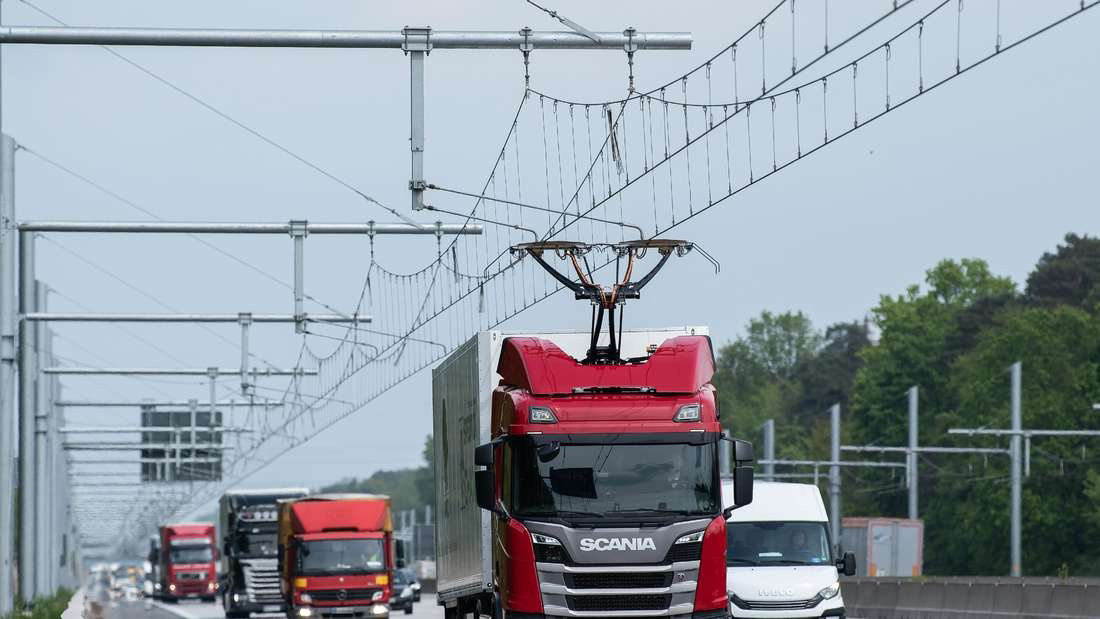
Meanwhile on the Autobahn:
Steel rails have even less friction
This is a very nitche application. Tom Scott did a video on it.
I’m very aware of that Tom Scott video, don’t worry. It is an okay middleground, but look at the people in comments pointing out the wear on the trolley.
More about this from Tom Scott
Switzerland runs a lot of these buses. Also trams, normal buses , trains. For those people in the U.S., it’s a very effective and efficient system called public transport.
Yeah literally, what is this post even saying
Yes Switzerland is famous for its public transport
Honestly, for growing places, or places with bad public transit, diesel busses are the way to go. They are the cheapest and require almost no new infrastructure so it can offset car emissions quicker than the other options. Established bus routes that are popular should be converted to tram lines or BRT.
People need to learn the difference between „Doesn’t catch fire“ and „Doesn’t burn AS EASY AS gasoline“.
Obviously diesel burns and batteries don’t really explode, but the only way to put out an EV fire is to dunk the car for a few days in a tub of water. And how many of those will a fire department have? 1-5?
We have these in Vancouver, a lot of them. And a few battery buses as well
Ehhhhhh! A fellow Vancouverite! Greetings from Scotland!
The torque on these things…
How are they?
Works just as well as the diesel buses. Sometimes they hop off the guide wires and the driver has to get out with a fibreglass pole to reattach them but that usually only happens due to driver error
There’s also an idea of doing this in highways.
Tom Scott video on it: https://youtu.be/_3P_S7pL7Yg
Trams… Where isn’t possible trams use trolleybus… That’s it!!! But what is sad, Eastern Europe falls into buying electric buses because it’s mainstream 😬
The best thing trolleybuses have going for them is their relatively low dependence on rare earth elements in production in contrast with BEV buses with their large batteries. Trolleybuses environmental toll is way smaller and it makes producers and operators way less dependent on third world countries devastating the environment with slave labor.
There’s also the centralization advantage and long lifespan. Centralized power generation is nearly always most efficient, and EV batteries degrade relatively quickly, while there are real life examples of 30 year old trolleybuses still operating fine.
Those 30 year old trolleybuses die when power dies, but even semi modern ones (aka 15-10 year olds) can still have diesel backup. New ones always have battery backup.
That’s true but still those batteries are significantly smaller than those of BEV buses - usually trolleybuses with batteries have 5-15km of range compared to 200-350 km of equivalent BEV buses which also means that the trolleybuses are significantly lighter than BEV buses, which helps with efficiency of electricity utilisation. Another efficiency factor is that not having to charge and deplete a huge battery will save quite significant ammnount of power that is lost as heat during battery operation.
batteries are significantly smaller than those of BEV buses
And that is an advantage. Lower cost and lower weight.
No argument here. We need more trolleybuses.
Hurr duurr rareearth . Written from your phone with rare earth materials, tomorrow you’re going to drive to work using rare earth to work on your laptop with rare earth materials.
Neither batteries nor drive train components of bevs HAVE to use rare earth. There’s tons of cars without them (bmw electric cars for example).
If you even respond, please include a modern car which does not contain ANY rare earth material and does not use electricity for energy storage.
Nothing is black and white you know. No decision is 100% good or 100% bad, we live in a sepectrum where some decisions may be less bad than others and that is the point.
Also current batteries will use cobalt or lithium, other options are either not efficient enough (like metal hydride or sulphuric acid batteries) or developed enough - solid state batteries, or LiFePo.
Also current BMW BEVs are still using lithium based batteries, whose mining pretty much is environmental disaster as a process.
We had trolley busses here in Wellington NZ for decades. The network needed an upgrade so our shortsighted council ripped it down while promising battery buses to replace the trolleys. We ended up with old, dirty, diesels chugging round our city for years, an I’m not sure we’ve gotten rid of them all yet. It was a disaster.
When I was there I found those busses really cool. But to my knowledge, they’re being phased out. They essentially combine the worst of bus and tram:
- relies on special infrastructure and thus cannot go anywhere, is more expensive than bus
- often shares the street with other cars being more vulnerable to traffic, uses tires (leading to fine particles)
I see it the other way. Trolleybuses (with either battery or diesel backup) are the best of both worlds. Much cheaper to built (compared to a tram) and doesn’t pollute in the city (compared to a full diesel bus)
Trams are surely better, but the simple infrastructure and relative simplicity of the drive train make trolley often cheaper than a diesel bus. Trolley buses with a small battery can also deviate from standard lines or bridge small areas between trolley lines.
Trolleybuses are the best compromise because they can (and in my country/city do) work as diesel/battery buses
They are still running in The Netherlands, although only in 1 city.
Vancouver, Canada, still rocking these bad bois
Buses are lame. They combine the cons of public transit with the cons of driving a car in a city. I believe in tram surpremacy.
The tram supremacy doesn’t lie in the inherent nature of the technology but in the way we treat it! Trams get:
- their own lane
- dedicated signals at intersections (often even priority)
- infrastructure money and thus planning effort
In short, they are (usually) treated like public transport. Busses on the other hand are too often treated like just another car that’s thrown in with the rest but also has the obligations of public transport. If you treated trams like that (sharing the road, waiting behind cars) they would be even worse than busses.
I love trams, light rail, and subway systems. I’ve had to think long and hard about why. Busses have notable advantages for flexibility and redundancy in the system, so why do I prefer to use a railed transit solution?
For light rail, grade separated trams, and subways it’s easy: they’re faster in the city. Like… WAY faster. They don’t fight traffic so I wait a few minutes (at most) in any city with real transit solutions, ride for a short bit, hop off, and I’m there. Not having to deal with my car is freedom.
So… trams… why trams over busses?
First of all they’re bigger. There’s more elbow room and it’s easier to get on and off. It’s easier for a group of people (see: me and the kids) to all climb on and make room. The doors are larger and it’s easier to use multiple doors to load a large group so the people getting on and off a tram can go much faster. There is less shuffling along trying to wedge yourselves into the tram like you’re forced to do on a bus.
Second, they’re predictable and have a visible route. When I’m walking around, I can tell where the tram will be because I can follow the rails. I don’t have to guess what the route will be or where I should go to meet it. Yes, busses have signs every so often, but it’s not nearly the same as seeing the rails and knowing I’m on the route. This is especially true if they do move the bus route (which is what everyone who advocates for busses says is a good thing), and I don’t know it. The bus is just gone.
Thirdly, the tram drives in a predictable path. I can be near it and know where it’s going to go. In fact, whole big crowds of people do it all the time in plazas in Europe. You can walk near the rails and know that you’re still safe. Check out the plaza in front of the main train station in Amsterdam. They chose to run the trams right through it, but not allow busses since they weren’t safe and predictable enough.
Fourth, they’re quiet. Trolley Busses get this too, but trams have had it a long time. They can co-exist with a people-oriented space without being too disruptive. When you sit in a cafe talking with your friends and the tram goes by it’s no big deal. When a diesel bus goes by it’s incredibly noisy.
Lastly, they’re a community commitment. When a city installs a tram, the whole city knows that the route it travels will be supported for a long time. If you choose to live near a stop, you’ll have transit. If you’re choosing to start a business, you’ll want to be close to the tram line so customers can easily get there. The same isn’t nearly as true for a bus line. I haven’t really pinned down why yet, but there’s a very different feel to rolling along on a tram while looking at businesses to visit, and rolling along on a bus. You just don’t have the same kind of connection to the street around you on a bus that you do on a tram.
You. You get it.
i actually like the aesthetic.
We have a ton of regular electric busses in my city in Denmark
Big powerlines everywhere in narrow city streets? People would get mad… it looks terrible. And we already have all our power cables below ground.