
deleted by creator
Yeah, but what about levers?
deleted by creator
This was unexpected and hilarious… :)
Pulleys 🤤
Actually just watched this before I saw this post. Great video and very informative!
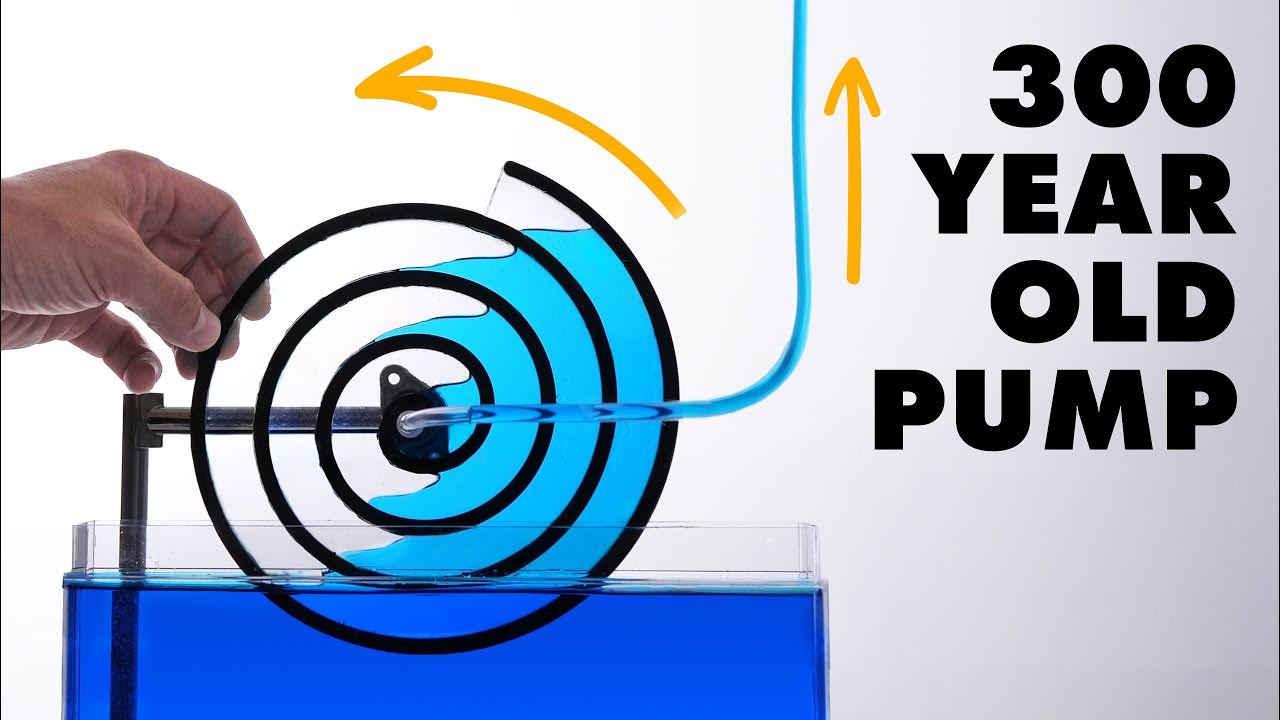
Also: I don’t know why they’re making them as strict spirals. It looks to me like anything that’s just a coiled hose with a large coil radius will work just as well, and you don’t have to carefully construct this strictly flattened shape for your machinery.
deleted by creator
deleted by creator
Steve Mould is a great YouTuber. Up there with Technology Connections
Isn’t this a scroll pump?
No, beyond both being spiral shaped they have basically nothing to do with each other
So, basically an Archimedes Screw.
Nope. The airlock effect inside the mechanism produces an additive effect with each coil that builds the pressure way beyond what a normal screw pump is capable of (he shows a friend who has one that pumps water to a garden 8 meters above just from the force of the river spinning it). That’s what makes it worth its own whole Steve Mould video.
Thankyou for making me watch the video. I wish I knew the math behind this.
My high school math teacher would be shocked to know I have written such a sentence. It’s a pity educational tech wasn’t better back then.
Yeah it’s super dope.
One way to think of it non-mathematically is like this: Water and air behave differently in this system in how they transport pressure. Water in a hose creates a certain pressure on what’s below it, where you can think of the pressure as measured by the depth of the water. So the weight of 8 vertical inches of water will create 8 inches worth of pressure on whatever’s below it. Air, however, will “teleport” the pressure it’s experiencing from one end to the other end, up or down, without contributing anything significant from its own weight.
So in the outside loop of the hose, on the right side if you’re looking at the video thumbnail, you might have a little 8-inch column of water, which can’t go down any further because there’s air in the way. So it’s exerting 8 inches worth of pressure down on that air. Then the air takes that pressure and “teleports” it to the top of the next coil inwards, so that if there’s 8 more inches of water in the next coil, it’s exerting 16 inches worth of pressure on what’s below it, from the air plus the weight of that much more water. Then the air below it teleports 16 inches of pressure over to the next coil in, and so on for every coil, until the inner coils have as much pressure as they would from a ton of water sitting on top of them, way more than the actual total vertical size of the system.
Thanks for such a detailed response, but I confess I do already understand the principle! I was actually just idly wondering what the delta on air+water pressure vs water or air only would be and how to calculate what diameters/speeds would be necessary to achieve certain heights/output.
I may have been tempted to build a mini version for the completely unnecessary reason of automating my plant watering with a spare tiny 3V solar panel that may no longer even work and some other trash. Just ADHD things.
I just like explaining stuff, that is my ADHD
Neat. I’ll check out the video when I get the chance.
Yes, but flattened
deleted by creator