

The website decomp.dev said Thursday that it is shutting down because “the community aspect of decompilation has been broken” by AI, and that projects that once required intense collaboration between people with different skills can now be done trivially with AI. The administrator of the website said that it has become impossible to keep track of which projects are primarily human-led and which ones are done by AI.
“Historically, matching decompilation has been a brutally difficult, time consuming task, on the scale of years for any moderately-sized game with a number of active contributors,” the pseudonymous admin of decomp.dev, who goes by Encounter, wrote on the site.
But recent frontier AI models like GPT-6-Astra have made it trivially easy to decompile a game: “They are significantly better at following complex directions, cross-referencing resources for symbols or debug information, and writing natural code with enough guidance,” Encounter wrote. “It is now clear that, with the right guidance, human input, and code reviews, AI can expedite the decompilation process in a significant way. What is also now clear is that the community aspect of decompilation has been broken.”
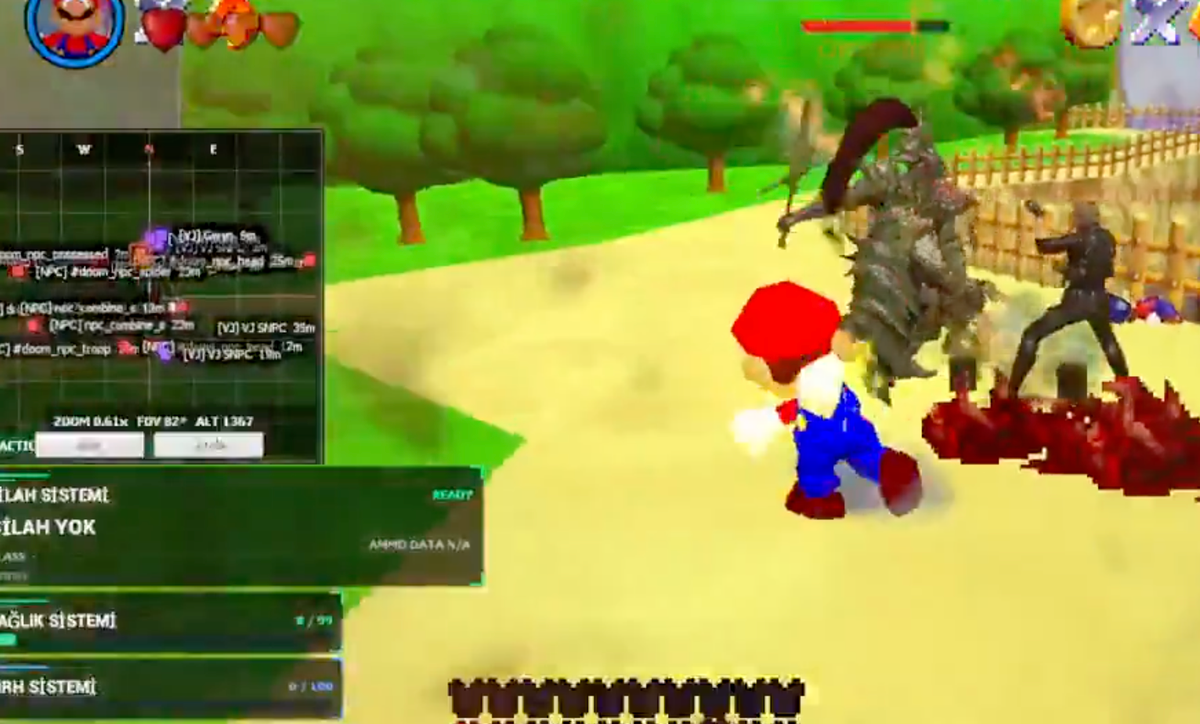
AI-powered video game decomps and recomps (recompiling code after modifying it) are everywhere. People have, for example, used AI to put Mario into Elden Ring, port games to platforms they were never designed to work on, or to combine various games in any permutations you could possibly imagine. In recent days, tools specifically designed to decomp games with AI have popped up, such as “decomp.wtf,” which promises to “point the AI agent you already use at a game you own. decomp.wtf turns it back into C, one function at a time, and checks every function byte for byte against the original.”
Decomp.dev was a collaborative website that hosted file libraries and tools for reverse engineering, re-coding, and decompiling existing video games, meaning taking an existing game and recreating its source code. Decompiling a video game can be done for a variety of reasons and is popular in a few different niches of video game fandom. Speed runners decompile video games to find potential glitches or advantages they can use to beat a game faster; hobbyists decompile video games to port them to new platforms or to emulate them (for example, making Super Mario 64 run natively on PC); modders decompile games so they can more easily modify them; archivists decompile games to recreate code that may be lost; and some people decompile games just for the challenge.
Encounter wrote that the use of AI in the community has sped things up to the point where it has become overwhelming to track human-led projects, and people using AI have taken existing, human-led AI projects and have created “hostile forks” of them, where open-source code written by humans is taken and “finished” by AI: “These kinds of hostile forks put little to no effort into meaningfully contributing to existing projects, tearing apart our community fabric.” Encounter added, “anyone with an AI subscription can manage to create a port or static recompilation that functions at a basic level […] While community members put in the effort to decompile a game, opportunists have frequently raced to release a half-baked, barely-functional port from it.”
Think the people assuming that clean room principles apply to this scenario are way too optimistic about the legality.
The most prominent clean room example was making a knockoff of the IBM BIOS. The thing is it was cloning a programming interface surface, and doing so with zero visibility into the object code, but instead an api reference written by people who did study the object code. Wine is even more clean room, guessing at a viable implementation based on black box observation of Windows behavior with zero understanding of the object code.
Translating object code into source code is not “clean room”. But even if it were, we are talking about a deep clone down to the implementation and up through the human presentation. Not merely some programming interface details with a completely novel backend and with other code mostly owning the presentation to a human.
People keep thinking they find a technical loophole but consistently get shot down the millisecond a rights holder takes note.
See the myriad of fan projects that don’t even try to clone a game engine but implement a game a new way, they get shut down hard.