

cross-posted from: https://mander.xyz/post/56483957
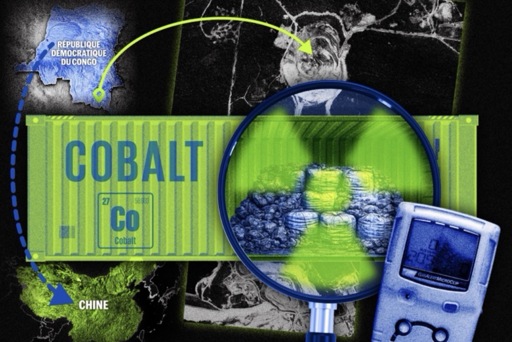
A new investigation traces the possible export of uranium from the Democratic Republic of the Congo (DRC) back to a confidential International Atomic Energy.
A paper published in Nature Communications (opens pdf), estimated that between 2,000 and 5,000 tonnes of uranium were exported from the DRC to China in cobalt hydroxide shipments between 2000 and 2024.
Faced with the evidence gathered in the investigation, officials in the DRC said that uranium contamination of cobalt ores was a real concern, both from the perspective of the health of miners and those living near the mines, and for the safeguarding of nuclear materials.
If the situation described in the IAEA memo had continued unabated, uranium extracted from Congolese cobalt ore could be strategically significant to China. In the past decade, China’s nuclear weapons stockpile has doubled to around 600 warheads and is expected to reach 1,000 warheads by 2030, according to estimates from the Pentagon.
China’s known imports and domestic production of uranium do not come close to accounting for the scale of this expansion. China’s Ministry of Defence has previously objected to US reports on the size of its nuclear arsenal and accusation of a non-transparent buildup.
Mining professionals say uranium, copper and cobalt frequently occur together in the Congolese and Zambian Copperbelt. The most extensively documented site was Tenke Fungurume Mining (TFM), one of the DRC’s largest cobalt producers.
The mine was owned by US company Freeport-McMoRan until it was acquired by Chinese group CMOC in 2016. Internal company documents reviewed by the investigators recorded uranium-rich cobalt samples, including a peak concentration of 1,100 parts per million in December 2016 – around 15 times the export limit cited by the investigation.
…
Lighthouse’s reporting on hidden exports of uranium from the DRC [Democratic Republic of the Congo] began with a leaked memo from the International Atomic Energy Agency [IAEA] … obtained in 2024. The previously unreported document was dated 2009 and cited credible information indicating that uranium was present in “significant quantities” in most cobalt ore from Katanga. The uranium was “actually exported as a by-product of cobalt,” the memo stated.
Since that document was written, cobalt mining in the DRC has scaled up dramatically and those mines have overwhelmingly sent their ore to China. By 2023, China was responsible for refining 80 percent of the global supply of cobalt, with the vast majority of the ore coming from mines operated by Chinese companies in the DRC. According to recent estimates 95 percent of Congolese cobalt goes to China.
In September 2024, Lighthouse teamed up with Sébastien Philippe, now assistant professor of nuclear engineering at the University of Wisconsin-Madison, then a senior researcher at Princeton University’s Program on Science & Global Security, to ask how much uranium could be making its way to China in exports of cobalt ore.
If the situation described in the IAEA memo had continued unabated, uranium extracted from Congolese cobalt ore could be strategically significant to China. In the past decade, China’s nuclear weapons stockpile has doubled to around 600 warheads and is expected to reach 1,000 warheads by 2030, according to estimates from the Pentagon. China’s known imports and domestic production of uranium do not come close to accounting for the scale of this expansion. China’s Ministry of Defence has previously objected to US reports on the size of its nuclear arsenal and accusation of a non-transparent buildup.
…
Steve Muanza, the head of the DRC’s nuclear energy agency, said it is “technically possible” and even “likely” that Chinese companies are extracting uranium from cobalt ore exported from the DRC. He said his agency had requested funding to install radiation monitors for trucks leaving the DRC for Zambia along the DRC’s National Highway One.
In a nation riven by war and with a long and porous border, however, shutting down covert exports of uranium will be extremely challenging. Assessing the full extent of risks to the communities living near mine sites will also need urgent attention.
…