
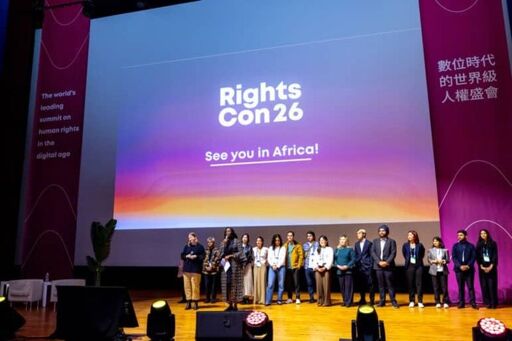
May 2026 was set to mark a milestone as Zambia hosted the world’s premier digital rights conference for the first time in southern Africa, just months before its elections. Instead, the government delivered a masterclass in censorship by pulling the plug on RightsCon, compromising flagship World Press Freedom Day celebrations in Lusaka and issuing a stark reminder of the fragility of digital rights and media freedom on the continent and around the globe.
…
The 1,100 virtual delegates and 2,600 in-person attendees, many of whom were mid-transit, were blindsided. Adjacent events planned alongside RightsCon, including the World Press Freedom Day programme, were downgraded, and solidarity boycotts and withdrawals followed.
Organiser Access Now has pointed specifically to China’s hidden hand in leaning on Lusaka because Taiwanese representatives were due to attend the conference in person – ironically at the Chinese-built Mulungushi International Conference Centre, as Beijing fiercely guards its “One China policy” amid its expanding infrastructural presence.
Responding to queries this week, the Zambian government conceded that “diplomatic sensitivities” were among the considerations, along with “national interest and security concerns”. However, to attribute the reasons for “postponing” the conference to external Chinese influence were “mischaracterisations”.
…
Zimbabwe-based Tabani Moyo, regional secretariat director of the Media Institute of Southern Africa, warned that these heavy-handed actions could spread “like wildfire” to other African countries, which may now feel emboldened to suppress activities that may be deemed politically sensitive. Zambia had chosen political survival over short-term economic gain in the capital city, he said.
…
Moyo, who travelled to Lusaka to participate in a World Press Freedom Day panel on digital transformation, AI and information integrity, said the fallout extended directly to digital rights and technological dependency, as the supply side of telecoms in the African context is increasingly reliant on Chinese infrastructure.
China has been steadily increasing its influence through digital infrastructure and surveillance spyware.
…
China’s extension of soft-power efforts in Africa
In terms of media influence, China’s soft-power tactics in Africa date back at least a decade, as tracked by Herman Wasserman, the Centre for Information Integrity in Africa’s director, in various research studies …
The Chinese Communist Party has invested heavily in the region’s news outlets, media advertising and training for African journalists to promote its narratives …
In 2023, the Chinese state news agency Xinhua formed partnerships with several Zambian media outlets, exposing a new African audience to Beijing’s propaganda …
In 2025, RSF described an “unprecedented SLAPP tactic” by Beijing to silence critics when the Chinese Chamber of Commerce obtained a gagging order to prevent the airing of a News Diggers! Documentary detailing the negative consequences of China’s commercial presence in Zambia.
China placed 177th out of 180 countries in the latest RSF World Press Freedom Index.