

- cross-posted to:
- hardware@lemmy.world
- cross-posted to:
- hardware@lemmy.world
To paraphrase Mean Girls, “stop trying to make hydrogen happen.”
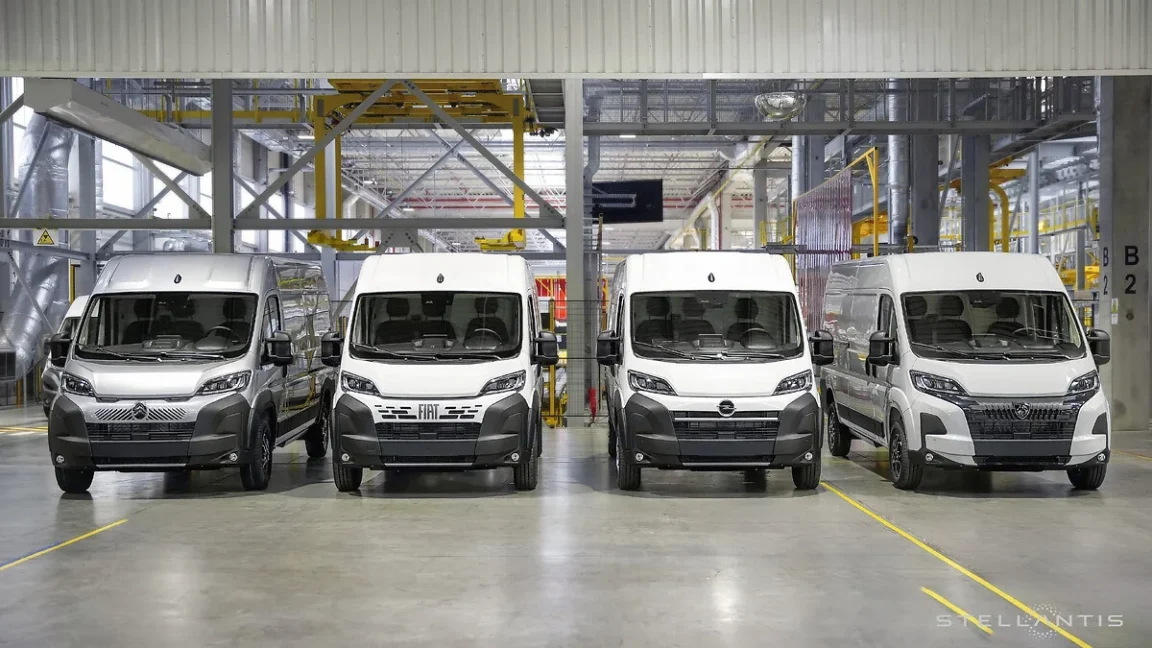
For some years now, detractors of battery electric vehicles have held up hydrogen as a clean fuel panacea. That sometimes refers to hydrogen combustion engines, but more often, it’s hydrogen fuel cell electric vehicles, or FCEVs. Both promise motoring with only water emitted from the vehicles’ exhausts. It’s just that hydrogen actually kinda sucks as a fuel, and automaker Stellantis announced today that it is ending the development of its light-, medium- and heavy-duty FCEVs, which were meant to go into production later this year.
Hydrogen’s main selling point is that it’s faster to fill a tank with the stuff than it is to recharge a lithium-ion battery. So it’s a seductive alternative that suggests a driver can keep all the convenience of their gasoline engine with none of the climate change-causing side effects.
But in reality, that’s pretty far from true.
You must log in or # to comment.
As noted in the article comments, not only are all of the theoretical benefits just not realized, but it’s also nothing but greenwashing since hydrogen is a byproduct of fossil fuel production (“green hydrogen” seems like a pipedream.
Now if only the US wasn’t slowly shooting itself in all ten toes with EV production and renewable energy policies…
? You can get Hydrogen through simple water electrolysis. In fact you can do it at home. That’s like how 4% of all hydrogen is manufactured.
You may not realize this, but 4% is not most.
You should also ask yourself how most of the electricity is generated to electrolysis the hydrogen.
You didn’t say “most” on your original post. You might want to edit it if that’s what you meant.
I suppose that’s fair, but given the context, an insignificant amount of… still not green hydrogen is sort of irrelevant
I think the idea is that if the infrastructure for hydrogen fuel exists and using fossil fuels is penalized, there’s an incentive to start producing more of it via electricity by, as an example, using excess power produced by renewable energy sources when demand is low, balancing the grid and leveling out electricity price fluctuations at the same time.
This relies on a lot of technical, economical, and political ifs though. The end goal is desirable but it’s not clear if there’s a feasible path there, considering the physical properties of hydrogen alone.
It takes more energy than it’s worth.
The infrastructure isn’t there, and hydrogen is more dangerous than gasoline if it leaks.
Hydrogen is more dangerous than gasoline if it leaks
I’d love to see a source on that.
This Report by the US department of energy says otherwise.
My chemistry lab experiment. 😅
Spicy gas go boom.
I suppose a slow leak wouldn’t be that bad though. A catastrophic failure from a collision would be not great.
I was definitely in the same camp of thinking (I mean Hindenburg etc, duh). But there’s been a bunch of studies where, because hydrogen basically immediately dissappates up and away, unless you’re in an extremely cramped area it’s much safer in collisions and unexpected containment breaches.
Even then, it actually poses less of a threat to life because it doesn’t create smoke or burn for awhile like gasoline does.
Ideally there are no harmful combustion byproducts when used in ICE, the reality is probably less harmful combustion byproducts, not none Hydrogen is lossy, Conversions being inefficient, Molecules small enough to migrate from containment, Embrittlement of pipes & tanks
3 or more times the infrastructure per watt delivered, a huge investment in resources
I suppose if there is excess generating capacity, hydrogen could be used as a storage medium for night timeTurns out lugging millions of heavy metal boxes around is a tough thing to make climate friendly
I wonder if we were developing petroleum refining and engines now instead of them being established and subsidised, if we would also find them to be unfeasible. I know petroleum products are ludicrously energy dense, but the whole process to make it usable is pretty intense, the infrastructure needed to get it everywhere is extensive, it leaks, it burns, and it smells bad.
It would be interesting to see the modern day cost associated with building out and maintaining gas infrastructure for cars
I’m m happy that they’re giving up on a non-feasible idea, but I’m so fucking sad that they are giving up on the larger hope of finding a post-fossil-fuel alternative to displace the ICE (also, fuck ICE in both contexts)